
Brian Luckett
Burton Grammar School Master (Chemistry 1963 – 1975)
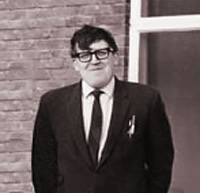 Brian Luckett was born in 1940 in London, and evacuated first to Newquay, Cornwall and then in 1944 to the very contrasting Colne in North East Lancashire. He was to remain in Lancashire and, during his teenage years, lived close to Pendle Hill where he attended Colne Grammar School. He was a very keen Burnley supporter at this time, always watching them play on a Saturday afternoon, often having played rugby in the morning at school. To this day, despite no longer being able to name any of the players, he finds himself habitually checking on Burnley’s results.
Brian had a very influential chemistry teacher, who made chemistry very interesting and exciting and he opted to take it at ‘A’ Level with a view to reading it at University. It was working in the textile mills of Colne during his school holidays that made him want to specifically read Textile Chemistry . In the noisy environment of clattering looms, spinning and carding machines, he became a very good lip reader which, he claims, helped him on numerous occasions in the classroom!
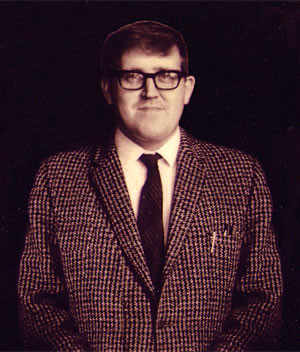 Brian obtained a BSc (Tech) degree in Textile Chemistry at the University of Manchester Institute of Science and Technology. At this time, the textile industry was going through a crisis and he decided to do a one year Postgraduate Certificate in Education at St. Luke’s College, Exeter. He had little chance of making the college rugby team though with the likes of Don Rutherford and Mike Davis (both future England captains) securing places. It was a much higher standard than the rugby he had enjoyed at school and university. His main teaching practice was at the Technical High School in Torquay.
Mr Luckett had anticipated working in the south west but was attracted by a post at the Burton Grammar School in 1963 to replace the departing Dennis Grimsley which he applied for and was successfully appointed.
The Head of Chemistry was Norman Jones. Also teaching chemistry at the time was Gareth Woods with whom Brian found himself sharing a flat in Blackpool Street. Before long however, Mr Woods was to accept the post of Head of Chemistry at Soham Grammar School in Cambridgeshire meaning that Brian was promoted to second chemistry master and Mr C. Heighington was appointed third.
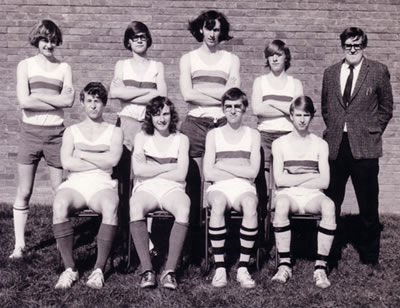 Shortly after starting, he was persuaded by Headmaster, Bill Gillion, to take charge of Cross Country. It was a burden he was never really happy with although he can recall many fond times with the likes of Peter Rose, Robert Barningham and David Van Der Merwe in the first eight. In particular, he remembers “a small spindly lad called Chadfield” being a superb terrier who joined the Royal Navy and was found to have TB. He could well have competed at international level had he been treated earlier.
He never actually ran round any of the courses, instead, he used to drive to the back of Newton Solney to shout support at the poor unfortunates (eminently more sensible). He even sympathised with those that took short cuts as he had done the same at his school, once falling in the canal. Brian was also happy to occasionally drive some of the chess team to away matches at other schools such as Bemrose, Derby School and Repton.
Brian recalls almost being expelled whilst in the 6th form for nearly setting fire to the school chemistry Lab! Having read that if you wrapped some sodium peroxide in wet newspaper it would ignite, he and a friend tried it but with little effect. The teacher, Mr ‘Aldophous’ Smith, shortly came into the laboratory and they threw the paper under a desk close to a radiator. Part way through the lesson, flames suddenly appeared as the correct moisture content was achieved.
With this in mind, he smiles at some of the ‘unofficial chemical experiments’ by pupils at the Grammar School during his time: The banned carbylamine reaction, on putting the constituent reactants down various sinks around the lab, when they all met up in the main drain, the really awful smell was generated in the lower corridor; the manufacture of highly explosive nitrogen tri-iodide powder to be distributed around the school. The staff had to pretend to be cross but couldn’t help but smile.
Brian reflects on what current day health and safety inspectors would make of boys sitting on their stools on top of the benches to watch the practical demonstrations without a safety screen. At the same time, he feels that the complete sanitisation greatly diluted the excitement of the subject that had encouraged previous scholars to take up careers within the chemical industry.
In 1966, Brian married Shirley, the Secretary of the Girls High School, at All Saints Church. Michael Thompson a pupil at the Grammar School played the organ at their wedding. The thought of this leads him to again reflect on many aspects of his time at Burton Grammar School which would seem incredible in the light of today’s educational system but which may well have defined the ethos of the school at that time: How well he, and other members of staff, got on with the boys and their families; how most teachers lived fairly close to the school without any thoughts of being in any way harassed by any of the pupils. He is sure that the chance meeting of boys and parents out of school was very healthy for the discipline and behaviour of school life. To this day, some forty years later, the Luckett’s are still occasionally visited by pupils or their parents, such as Peter Rose’s mother.
Like a number of schoolmasters, Brian also references the Burton Rugby Club as a bonding influence. Staff and pupils were given time off on numerous occasions to, for example, go and watch Burton play an Oxford University XV at Peel Croft, often featuring ex-pupils. It was also host to the Old Boys matches which kept the school’s rugby tradition alive.
On a couple of occasions, Mr Luckett tried to leave Burton Grammar School for higher posts in other schools but Bill Gillion, countered with the offer of a rise in the grading of his current post. He was never quite sure whether this was because of how highly the young staff were valued or whether the headmaster preferred the ‘devils he knew’.
In the early seventies he started the Wildlife Club on the request of pupils Beard and Eaton and, together with Colin Bagshaw, took boys on bird-watching trips to the Norfolk Broads, Slimbridge and other reserves – another “wouldn’t happen today”! ‘Plant a tree in 73’ was one of the catch phrases that helped the small group plant hundreds of trees at the RSPB bird reserve at Coombes Valley in North Staffordshire. To this day, he vows to one day go back to see how they have grown.
He left the school at the end of the final year of Burton Grammar School in 1975 after an offer by Jack Adams, who was a good friend of Norman Jones and the husband of Peggy Adams, head of Physics at the Girls High School, to be Head of Chemistry at Shelton Senior High School in Derby which he accepted. He had been offered the same post two years earlier but had been persuaded to stay.
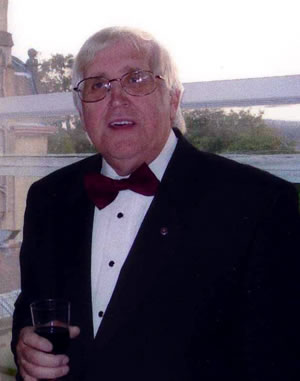 Brian was to remain there for fourteen years, before transferring to Wilmorton Tertiary College in 1989. He finally retired from teaching in 1995, but carried on marking ‘A’ Level Chemistry papers for the Cambridge Board for a further six years.
He looks back at his twelve years at Burton Grammar School as being the happiest of his thirty-two years in teaching and has never regretted taking up the post. The Lucketts and Bagshaws remain good friends together with the once assistant secretary of Burton Grammar School who was largely responsible for his meeting his wife.
Brian enjoys an active retirement being very keen on reading naval fact and fiction, pottering on his allotment and snoozing in his shed, family history, toy and model making and, at the time of writing, is President of the Ashby Rotary Club.

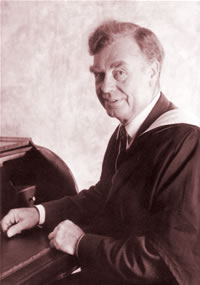 William H Gillion, more affectionately known as ‘Bill’, was educated at Paston Grammar School in Norfolk from where he was successful in gaining a place at Trinity College, Cambridge to read Mathematics. In 1934, he was awarded an Honours degree and he went on to gain an M.A.
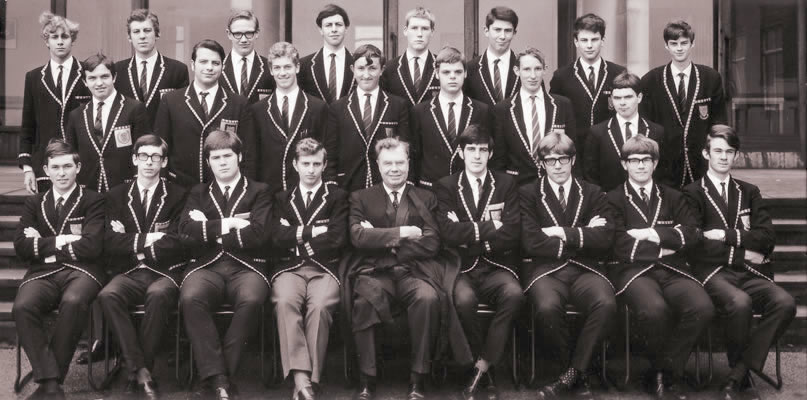 Mr Gillion was tremendously keen as far as academic standards were concerned, and the achievements of the school were never higher than under his headship. In 1960 William, with the co-opted help of Harry Smith, inaugurated a new form 5X. This was a special class that was for the most gifted pupils of form 3A. It meant that group of them would study the fifth form syllabus, with the best available tutoring, in their fourth year to gain a year so that they would be able to study Open Scholarship, which went well beyond normal ‘A’ Level, in their year in the Upper Sixth rather than having to spend an addition year there. Bill’s dream of academic excellence was realised; in a single year, Burton Grammar School achieved fourteen Scholarships and Exhibitions. To put this in context, Repton School achieved eight in the same year!
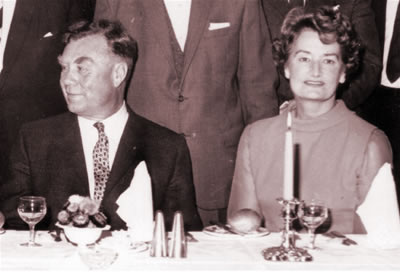 In 1975, two years after he left, the school closed, and was turned into the Abbot Beyne Comprehensive School’s Evershed building. You could almost say therefore, that his career at Burton Grammar School spanned the time of the beginning and the end of the Winshill school.
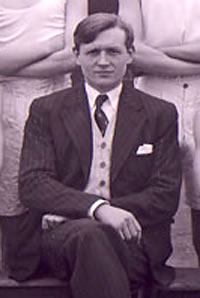 Victor was born in Rotherham, Yorkshire in 1925. He started his secondary education at Maltby Grammar School, one of whose most famous sporting pupils was Freddy Truman.
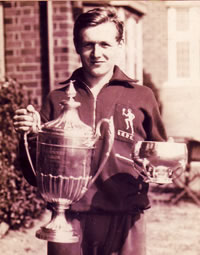 In 1942, he attended Loughborough College of Athletics that has produced many of England’s finest athletes the likes of Sebastian Coe, David Moorcroft and Sir Clive Woodward. In his first year, he won the coveted ‘Victor Ludorum Trophy’ (to save you rushing to Google to find out who Victor Ludorum was, as I did, it is in fact, Latin for “winner of the games”). It was the first time that this had been awarded to a middle-distance winner and Vic went on to win it the following; the first time that this had been achieved too. He also won the ‘Freshers Trophy’ for Athletics and Swimming combined. During this time, aside from athletics, he played for the college rugby team and was cross-country captain.
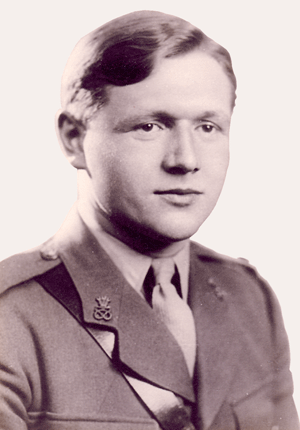 In 1944, his time at Loughborough was cut short with a one year deferment due to the war and was to join the Queens Regiment of the army in Maidstone, Kent. He was soon commissioned to the North Staffordshire Regiment and posted to Northern Italy where he was to patrol the Yugoslav border against gangs of Yugoslav partisans and escaped German prisoners of war. On conclusion of the war and before being demobbed in 1948, Vic played for the Central Mediterranean rugby and athletics team.
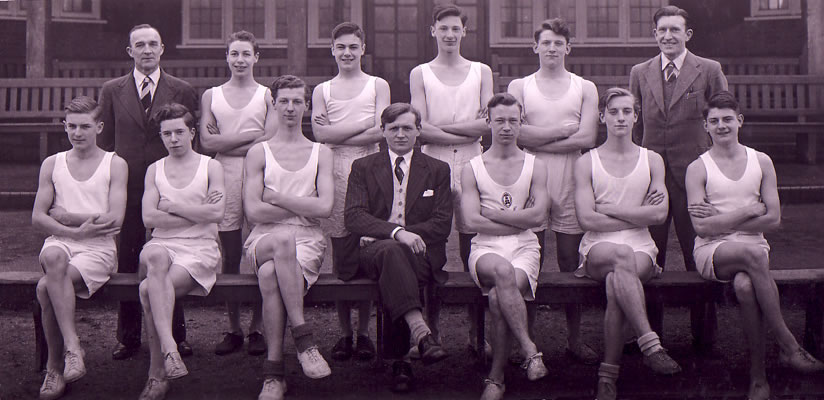 In January 1952, Victor joined Burton Grammar School, Bond Street as Head of Physical Education. Prior to this, the music teacher took PE and exercises were very basic. Immediately, circuit training was introduced with targets to reach bringing a whole dimension that had previously been lacking. Victor was also to develop the existing athletics, boxing, swimming, cricket, cross-country and rugby supporting Jake Hammond, Harry Smith, Jack Adams and Norman Jones. His weekends however, were taken with rugby where as flanker (wing forward in those days).
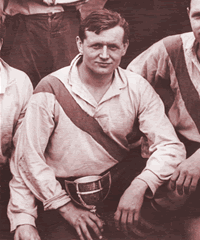 In 1972, Vic left Burton Grammar School and became ‘Secondary Schools Advisor’ for the country borough. Shortly after, he was one of the first four staff coaches for National Rugby Union. A year later, in 1973, Vic spent a few weeks rugby coaching in Poland where he was a little surprised to find that the sport had such a following there. He was later to also spend a short time coaching in Denmark.
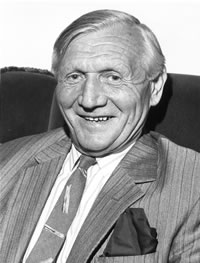 Among other sporting acknowledgements, Victor has been president of the Staffordshire Rugby Coaching Society where he gave practical help to both coaches and individual players; president of Burton Rugby Club as well as President of Staffordshire Rugby. He has also served as chairman of Burton Sports Advisory Council and chairman of Burton Rugby Club, where his membership now spans well over fifty years. There is now a suite named after him at Burton Rugby Club. Some PE teacher!
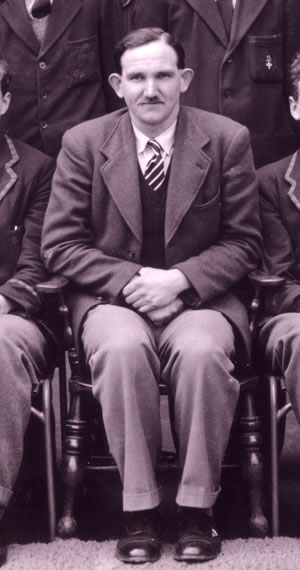 Harry Smith, affectionately known as ‘Brab’, was born in 1923 in Taunton, Somerset. His Grandfather was the pioneering founder of the Ramblers Autobus company which was to establish routes throughout the West Country. Harry’s father eventually took over the running of the company and they had sufficient means to send Harry to the well esteemed Taunton Public School. To this day, Harry can clearly remember the maths teacher, Mr John Evans, who was to have the strong influence on his life that Harry was himself going to eventually have on so many others.
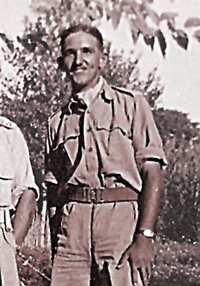 Towards the end of the war in 1945, Harry was made an Educational Officer and sent to Perugia College in Italy to re-educate troop in preparation for their return to normal life. By sheer co-incidence, he found himself teaching alongside his old Chemistry master from Taunton Public School.
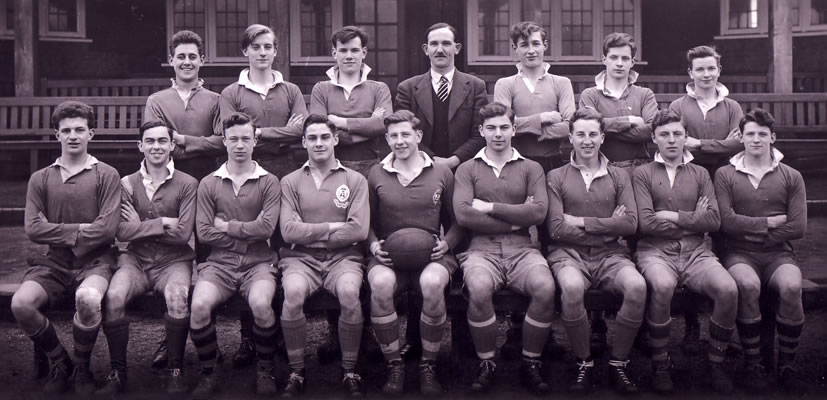 Harry put a great deal of time and effort into this and spent his Saturday mornings on the school rugby field. He was slightly perturbed to discover that Norman Jones received an additional allowance for his running of the Athletics whereas he received nothing. He took up the issue with the Headmaster, Mr Herbert (Horace) Pitchford, who had been appointed to replace Mr Moodey after is tragic recent death. Harry was declined which led to a feeling of resentment for which the school would pay dearly.
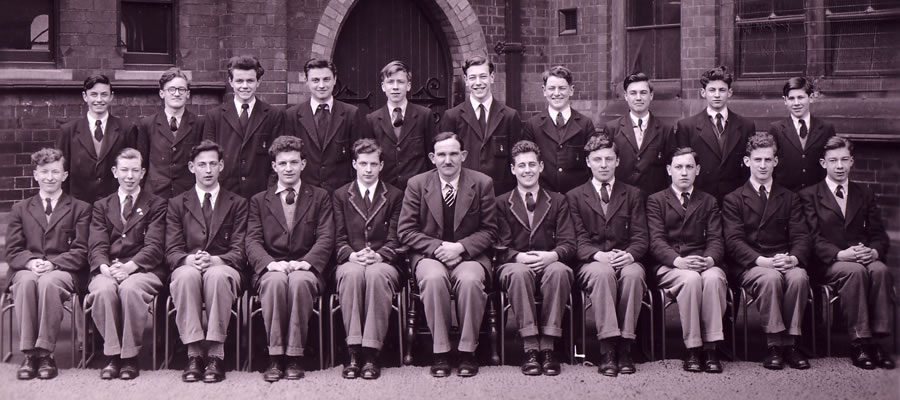 Shortly after the Winshill school was opened, William Gillion was appointed as Headmaster. Mr Gillion, himself a Cambridge Graduate of Mathematics, was a strong advocate of academic excellence and felt that the Mathematics Department at the school, then headed by George Cooper, did not offer provision for the most talented students. He was aware of Harry Smith and had received numerous accounts that he should never have been allowed to leave. So, in 1958, he wrote to Harry asking if we would consider taking over as Head of Mathematics and to run the Open Scholarships, which went beyond ‘A’ Level to prepare the most gifted students for places at Oxford, Cambridge and other Universities of Excellence.
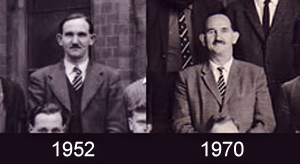 In 1960, Harry helped Bill Gillion to inaugurated a new form 5X to allow the most gifted pupils of form 3A to jump a year so that they would be able to study for Oxbridge entrance exams in their Upper Sixth without having to spend an addition year there. This proved to be tremendously successful and in their out-take year, the class achieved a record number of Oxbridge places, including Scholarships and Exhibitions, actually out-performing Repton Public School!
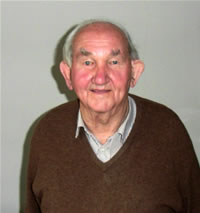 Harry’s time at the Grammar School also included the period where it was to be abolished in favour of becoming Abbot Beyne comprehensive school which led to much greater frustration. Harry himself sees this as “one of the greatest howlers the government has ever made”. His pleas for early retirement were declined so he was to continue at Abbot Beyne for a further three years by which time, he felt that we couldn’t have stood it for a moment longer.
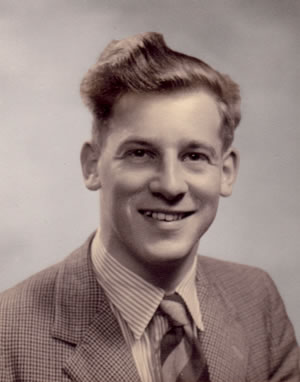 Geoffrey was born in Radcliffe-on-Trent, Nottinghamshire in 1928. He was educated at West Bridgford Grammar School from which he gained a place at Hull University College to take a London BA Honors in Geography from 1947 to 1950.
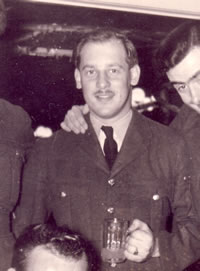 In 1953, Geoff and his now wife decided that they would like to move back to the Midlands somewhere near Burton or Nottingham.
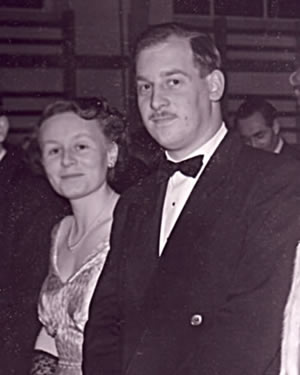 Having been pleased with Geoff’s performance, he was a natural successor so at the start of the following term, Mr Pitchford returned, Mr Cooper resumed to teach maths and Geoff Henton was permanently appointed as geography teacher. All could not have worked out better!
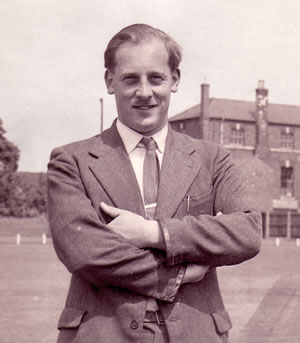 In 1968, George Cooper retired as Deputy Headmaster. At this time, Geoffrey was still second geography teacher under Ron Illingworth as Head of Geography. Harry Smith had not too long earlier returned to the Grammar School to take over the maths department. Although thought of as being the most likely candidate, Harry had made it plain that he had no interest in such a position wanting instead, to concentrate on mathematics and the open scholarships which were his passion. Speculation was that Mr Hugh Wood, Head of the languages department, would be likely to succeed above other heads of department. Nonetheless, Geoffrey decided to formally apply and was interviewed.
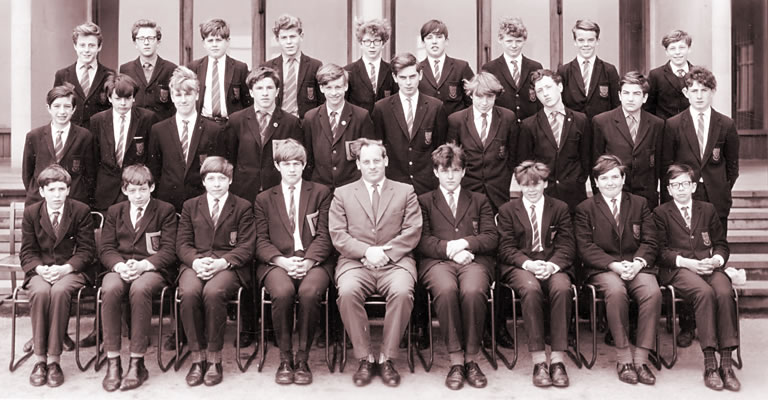 In 1973, William Gillion was to retire as Headmaster in the middle of the year due to external pressures and Geoffrey was appointed acting Headmaster for the remainder of the year until Brian Harris was instated, having been moved from Horninglow Secondary Modern School to oversee the ‘smooth’ transition from Grammar School to Comprehensive. At this point, Geoff reverted to Deputy Headmaster for what was probably going to be the most disruptive period in the school’s history. Geoffrey earned much respect in this period for his strong focus on making sure that the now mixed school students got the best possible education out of the situation as it now was without getting drawn into the politics of either side.
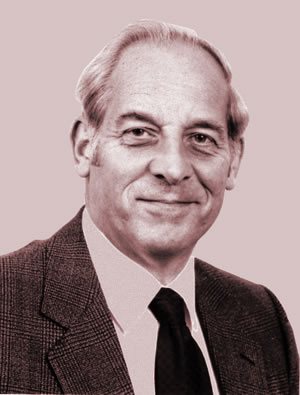 He continued as an effective Deputy Head and geography teacher until he was forced to take early retirement in 1984 due to poor health.
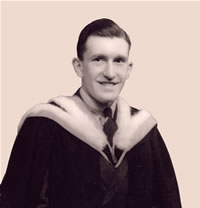 When he graduated three years later, the second world war was quite well advanced and Norman’s knowledge was put to use overseeing the production at the Government Explosives Establishment in Drigg, south of Whitehaven.
 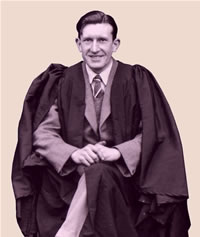 For the first years at Burton Grammar School, Norman lodged with the Binns family in Winshill. When his father began to suffer with his health, his parents moved from Manchester to Winshill and Norman moved in with them. Norman was though, soon to marry and move to Ashby Road where he was to remain for the rest of his life in a home still occupied by his wife, Sheila.
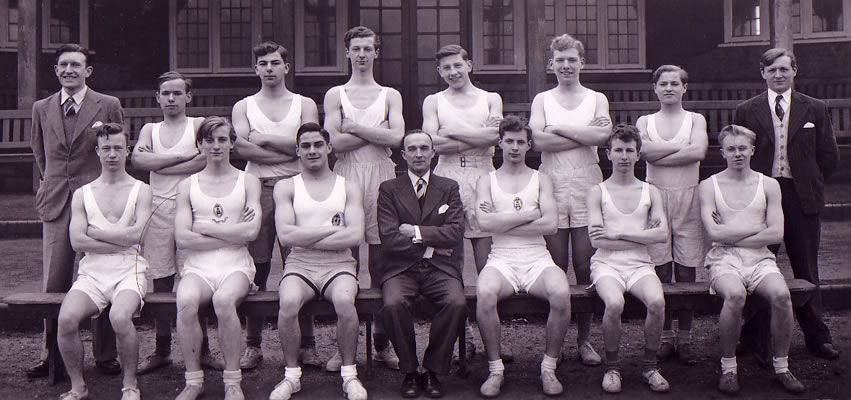 Norman was also heavily involved with school athletics in his early days, having earlier in his life been a promising sprinter. He working together with Victor Roebuck, the appointed PE (Physical Education) teacher, not knowing at this time that the two of them were destined to remain on the Grammar School teaching staff together for many decades to come.
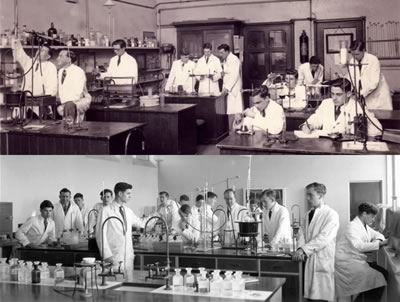 Norman taught at both Bond Street and Winshill and had considerable input into the design of the new laboratories. The original benches at Winshill proved to be too large and had to be hurriedly modified before school was back in session.
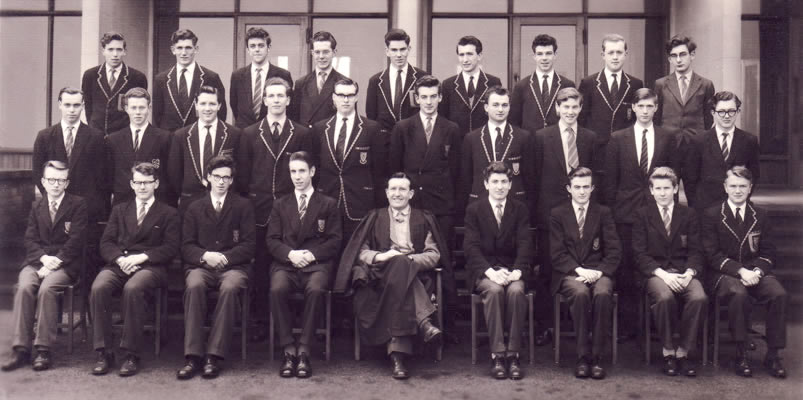 With many photographic slides of his travels, Norman presented a number of illustrative presentations to the Grammar School Sixth Form Society, as well as many outside groups and societies which were very much appreciated by those fortunate enough to attend. The experience had given Norman the yearning to travel and subsequently he became a very keen caravanner, travelling very extensively on the continent with his wife and young son during the long school holidays.
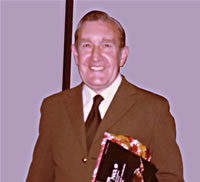 Norman requested early retirement and consequently retired in 1979. Post-retirement, Norman and Sheila led an active and enjoyable life together and made the most of their join love to travel. In what was to be his final year alone, he and his wife travelled to Spain, Africa, and South America. With only minor ailments, his death on June 10th, 2005 came as something of a sad surprise.