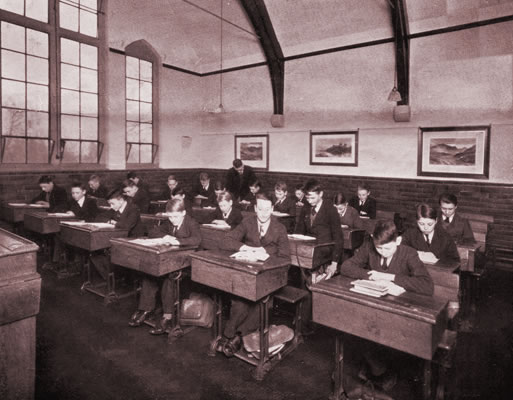
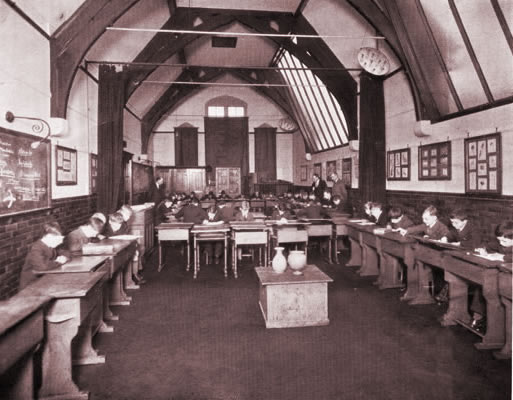
In 1861, the government set up the Clarendon Commission to inquire into public schools and make recommendations about the needed changes, in particular, any reform required to broaden education from ‘classic’ to ‘modern’ subjects such as mathematics, science, history and modern languages. In 1864, this was followed by the Taunton Commission (named after the chairman Baron Henry Taunton, not the town!) to inquire into grammar schools.
This involved a school visit from assistant commissioner, T.H.Green who made an inspection of all grammar schools in Staffordshire. Below is his report of Burton Grammar School in September 1865.
BURTON FREE GRAMMAR SCHOOL
Headmaster: Rev. Henry Day, LL.B.
Usher: Henry Hodson
In 1861, the government set up the Clarendon Commission to inquire into public schools and make recommendations about the needed changes, in particular, any reform required to broaden education from ‘classic’ to ‘modern’ subjects such as mathematics, science, history and modern languages. In 1864, this was followed by the Taunton Commission (named after the chairman Baron Henry Taunton, not the town!) to inquire into grammar schools.
This involved a school visit from assistant commissioner, T.H.Green who made an inspection of all grammar schools in Staffordshire. Below is his report of Burton Grammar School in September 1865.
The grammar school at Burton consists of two departments. At the time of my examination, there were 26 boys in the upper department and 48 in the lower. All the boys in the upper department were learning Latin, and more than half of them Greek. English grammar and analysis, French, geography and English history, as well as arithmetic, are attended to. Considering the number of subjects taught and the age of the boys, I thought the standard of this department satisfactorily high. There were only four boys turned 14. These together formed the 1st and 2nd classes. Two of them translated for me on paper 20 lines from the First Iliad, which they had been reading, with only one serious mistake each, and with considerable general neatness and accuracy. Exactly the same may be said of a translation which the same boys did from the First AEneid. Two others did a very fair translation from Caesar. The 3rd class, however, forms the hope of the school, consisting mostly of boys about the age of 12. These did translations from Ovid’s Heroides for me, both on paper and viva voce, in a way that showed a very careful grounding.
In arithmetic six boys of the upper department did the most difficult sums I could set them quickly and correctly. The rest were not so advanced, but what they did was generally done correctly.
I examined the upper four boys also in history and the analysis of Goldsmith’s “Traveller.” In history they were not positively deficient, but their knowledge did not seem fresh. In English analysis they seemed as well up as need be.
The whole upper department, I understood, did a written examination every Saturday morning. The result of this appeared in the neatness with which they did work on paper. Their writing I thought generally good, and their spelling and grammar were correct.
The lower department seemed inferior all round. Many of the boys in it were very young, and apparently of very humble parentage, who had scarcely yet learned to read properly. The upper classes did decently in history and geography, and both their ordinary writing and their writing from dictation were pretty good. The arithmetical standard I thought scarcely so high as it ought to be. Very few of the boys attempted the more difficult sums that I set them; what they attempted, however, they generally did correctly. The general tone of the school, so far as I could see and hear, was good.
The school building is very unsatisfactory for the purpose. It consists of two long, low rooms, the upper of which is used as the ordinary schoolroom, the lower as a class room. The ventilation is bad, and the offices not in a proper state. There is no playground, not even a yard, nor any house for the master. The school adjoins the churchyard, and is low and damp in situation. A man likely to know told me that he could recall 16 boys who had been taken from the school within three years on account of the situation.
On the whole, if the number of boys in the three higher classes of the upper department were more in proportion to the population and wealth of the town, the state of the school, as compared with others, might be reckoned satisfactory. As it is, the size of the upper department (which, however, had risen from 17 to 26 in a year and a quarter) scarcely suffices to justify the state of the lower.
The population of the town is supposed to be nearly 20,000, and for several years it has been eminently prosperous. On the Marquis of Anglesey’s property there, land for 500 new houses had been let during the six months previous to my visit. The magnates of brewery, of course, live in country houses elsewhere, but there are a good many professional men in the town, and a large number of men who get incomes of £500 a year and upwards as managers in the breweries. This part of the middle class seems as yet to make very little use of the grammar school, though perhaps more than it did, while on the other hand the temptation of lucrative employment at the breweries draws all the boys from the school at the age of 14.
The absence from the school of those boys who ought to fill its upper department I heard accounted for chiefly on two grounds: (1.) The professional and more respectable mercantile men objected to the mixture of their sons with those of a lower class; an objection which the separation of departments and the imposition of a £7 annual fee on boys in the upper one, established in 1858, have not yet removed. (2.) The grammar school, with its bad building and situation, could not compete with the attractions of cheap boarding schools. I also heard it stated that the head master, whose ability as a teacher all acknowledge, was thought scarcely to give enough of his time to the school.
The transfer of the school to a new building, with proper residence for the master and playground, in the suburbs would do a great deal to make it more popular with the middle class. Land for this purpose could, I believe, be readily obtained, and the feoffees of the town charities are said to have large accumulations, from which they have given freely to the elementary schools of the town. If, in addition to a new building, scholarships could be provided, tenable either at the Burton school itself, or at some other having better means of providing an education for the universities, the general character of the school, and with it the educational prospects of all the boys in the town, might be greatly raised.
Digest of Information
FOUNDATION AND ENDOWMENT. – By William Bean, Abbot of Burton Monastery, who, in 1520 built and gave money in trust for endowment of a schoolhouse for a free grammar school. Earliest deed in existence is a conveyance to trustees of land for benefit of school, dated 10th June 1745. Further endowment of £3 per annum for master and £6 for usher in 33 Eliz. (1590-1) by Elizabeth Paulett, out of a rentcharge of £10 on lands in Clerkenwell in Middlesex.
SCHOOL PROPERTY. – Farm at Breaston containing 112 acres, and another at Orton-on-the-Hill containing 120 acres. Also £187 3s.3d consols derived from sale of land to railway; and £333 6s.8d consols, called “Clerkenwell house dividends.” Annual income £452 gross, £439 net, all applied to purposes of school. Site good. Building inferior.
OBJECTS OF TRUST. – The maintenance of a free grammar school and schoolmaster in the town of Burton.
For all boys between the ages of eight and 16 years, of parents resident in the parish being able to read and write and knowing the first four rules of arithmetic, with a preference to longest residence. All (except five in each school, selected from poor as a reward for scholarship and good conduct) to pay capitation fees, viz. £7 for upper school, and for boarders and non-resident day scholars in lower school,£2 for day boys at lower school(scheme 1858).
SUBJECTS OF INSTRUCTION PRESCRIBED. – In the upper school, English, Latin, Greek, French, and German, arithmetic, mathematics, history, and geography. In the lower school, English and Latin grammar, with exercises and translation, elements of French, writing and arithmetic (with special reference to commercial rules), with rudiments of modern geography, and modern history (scheme 1858).
GOVERNMENT AND MASTER. – Scheme approved by Court of Chancery 2nd August 1858.
The trustees, 15 in number, appointed by the Court of Chancery, manage the school property subject to the scheme, appoint and dismiss the masters,and visit school. Head master required to be a member of the Church of England and a graduate of an English university. Head master has the internal regulation of the school. Cannot hold other preferment.
State of School in Second Half-year of 1864
GENERAL CHARACTER. – Classical. In age of scholars, third grade.
MASTERS. – Head master receives fees, and pays from them assistant masters and French masters. Of the surplus he retains two thirds for his own use. Total income from endowment £270 from fees £25. Usher, £140 from endowment, and may take boarders.
DAY SCHOLARS. – 74, from distances up to three miles. Upper school, 5 free; 29 paying £7 a year. Lower school, 5 free; 35 paying £2 a year.
BOARDERS. – A few boarders been with the master since Michaelmas 1866. (8th January 1868). Terms £60 to £70 per annum. Four meals a day. Meat once at least. Each boy has a separate bed. Boys rise at 7.00 a.m. and go to bed at 9.20 p.m.
INSTRUCTION, DISCIPLINE, ETC. – At admission must read and write and know the first four rules of arithmetic.
School classified by one leading subject chiefly.
School course modified to suit particular cases.
Scripture lesson Sunday for boarders. Day boys prepare lesson at home for Monday. Boys taught Bible and Church Catechism. Monitors appointed sometimes to assist in instructing the junior classes.
Promotion by marks, and examination held at Christmas by head master and at Midsummer by examiner appointed by trustees.
Marquis of Anglesey gives prizes of books to value of £5.
Punishments: caning on the hand in public and impositions.
No playground. No gymnasium. Drilling taught in summer.
School time 40 weeks per annum. Study from 28 to 30 hours per week.
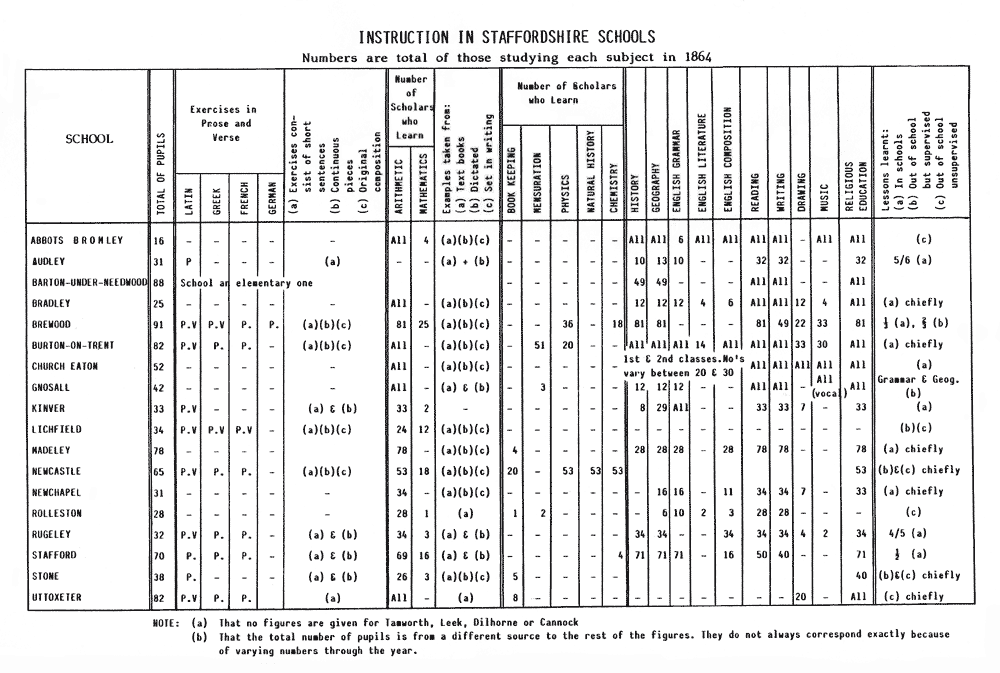
At the end of the commission came a sort of ‘yesteryear OFSTED report’ providing a comparison of all Staffordshire grammar schools. There were 22 such schools at this time, unfortunately, for some reason there are no results for Tamworth, Leek, Dilhorne or Cannock Grammar Schools. It is though, an invaluable picture that paints a thousand words.

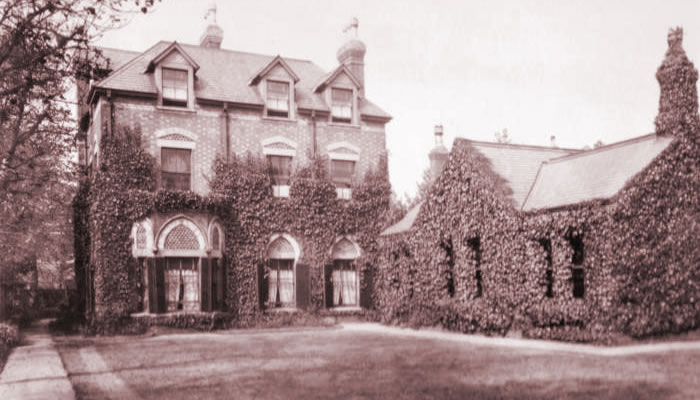
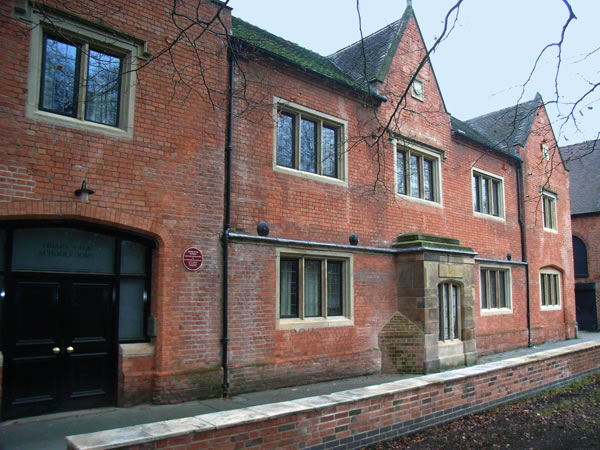
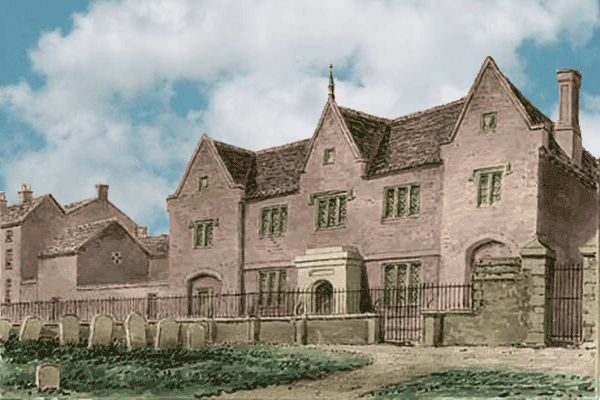
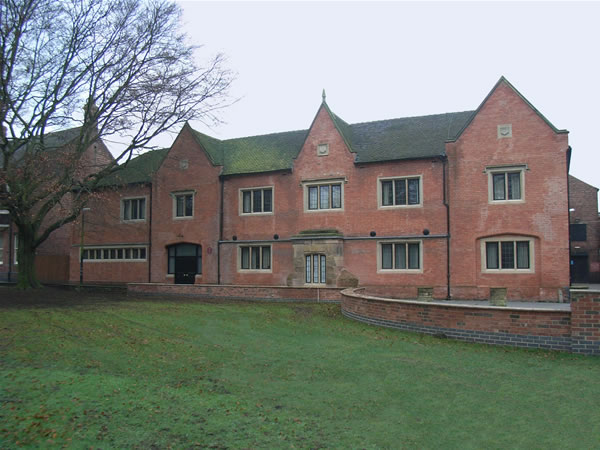
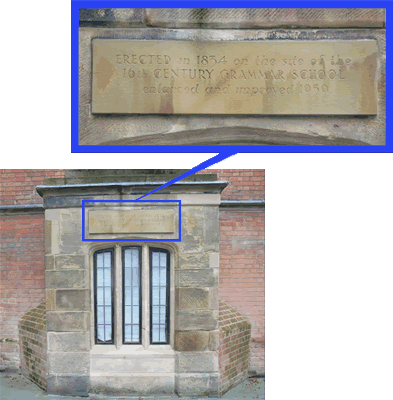
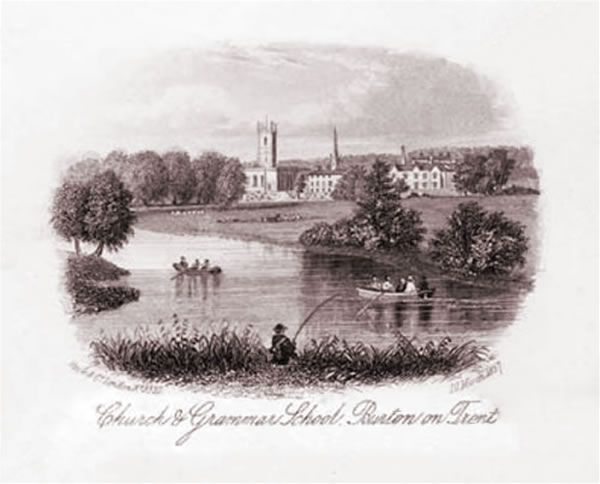
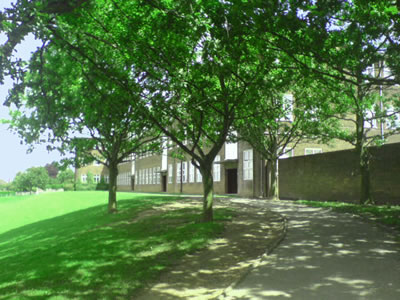
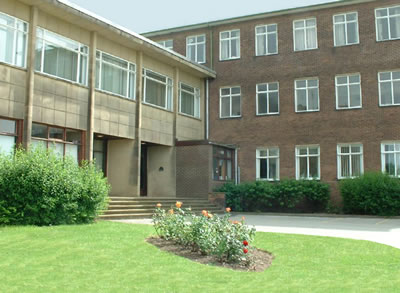
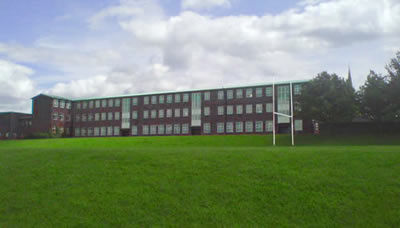
 On the face of it there’s never been anything special about Bond Street. Nothing at all, except, that is, for many of us who used to turn up there from Monday to Friday each week, weighed down with bulging satchels wondering what the day held in store. No, not the fashionable shopping paradise situated in London’s West End. This Bond Street was, and still is, the Burton upon Trent version. Stretching from Lichfield Street to the old Ice Storage building it was a thoroughfare far less grandiose than it’s namesake in the capital. Gaze along it these days from a vantage point on the pavement near Peel Croft and you will notice the open ground on the left which is used as a car park. And, like me, you will probably wonder how a school with it’s sprawling collection of outbuildings could possibly have fitted into such a tiny piece of land. But it did, for this is where Burton Grammar School was situated – from 1877 until the new premises in Winshill were opened in 1957.

 The Secretary of State for Education at the time however, refused to re-open the direct grant list. Given that person’s later education policies, this may seem surprising – it was none other than Margaret Thatcher. Fifteen years or so later, her government’s Education Reform Act set up Grant Maintained Schools to free schools, if they so wished, from the dead hand of local authority control. By that time, the old Direct Grant Schools had been forced by the previous administration to choose either to go totally independent or be subsumed into the local authority system.
 Everything happened at break-neck speed. The new school had to be up and running within months. There was no investment in facilities apart from botched-up conversions of toilets. One group of parents attempted to halt the re-organisation by seeking an injunction. It was the middle of August when a judge in chambers ruled that to unpick the re-organisation at that stage would have been more harmful than to let it go ahead. Until then, we didn’t know for certain what awaited us at the start of the autumn term.
 The vast majority of staff, especially the younger ones, were pragmatic. If they wished to teach in a grammar school, then they had to look towards the independent sector. This was not appealing to many of those who had been educated and had taught in the state system. Staff had to do their utmost, for the sake of all pupils, to make the slit-site system, imperfect though it was, work.