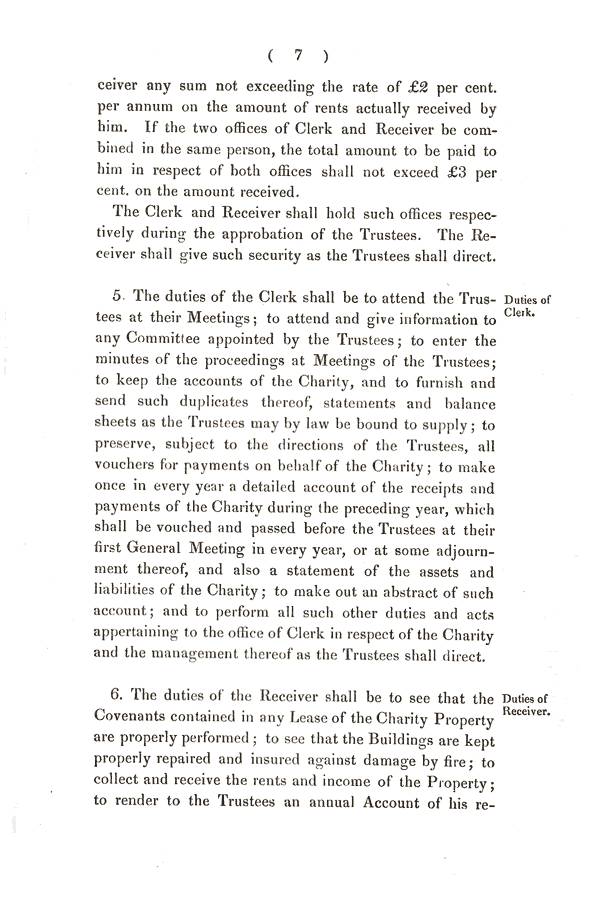
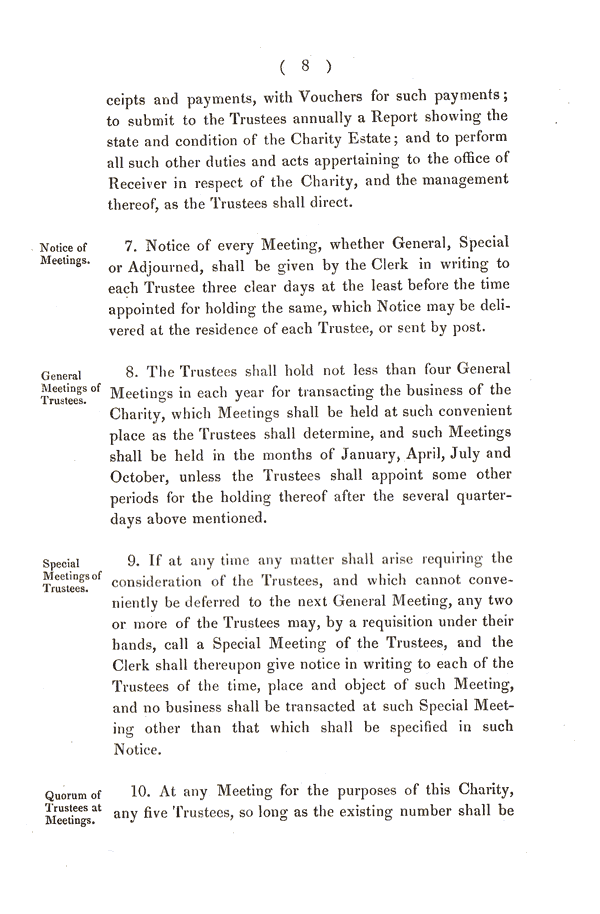
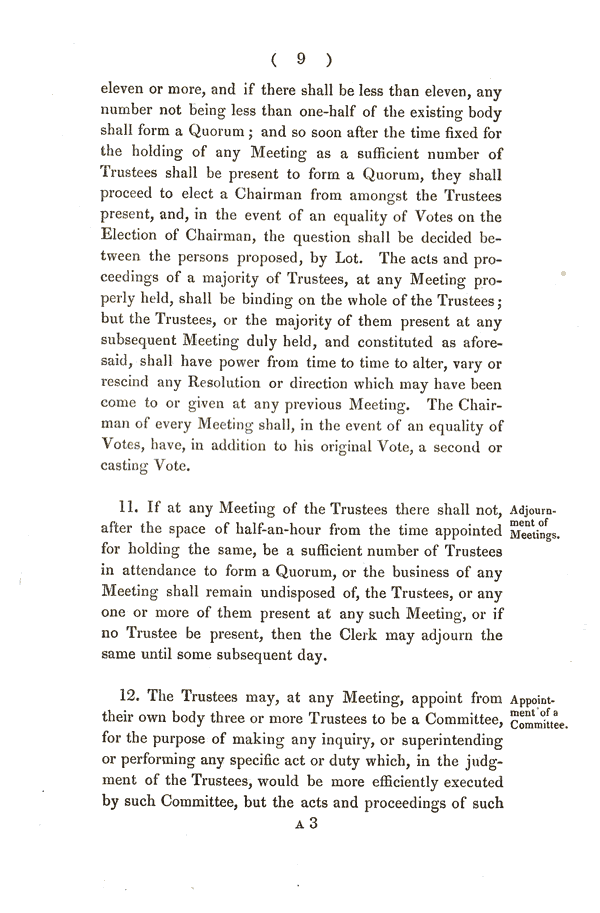
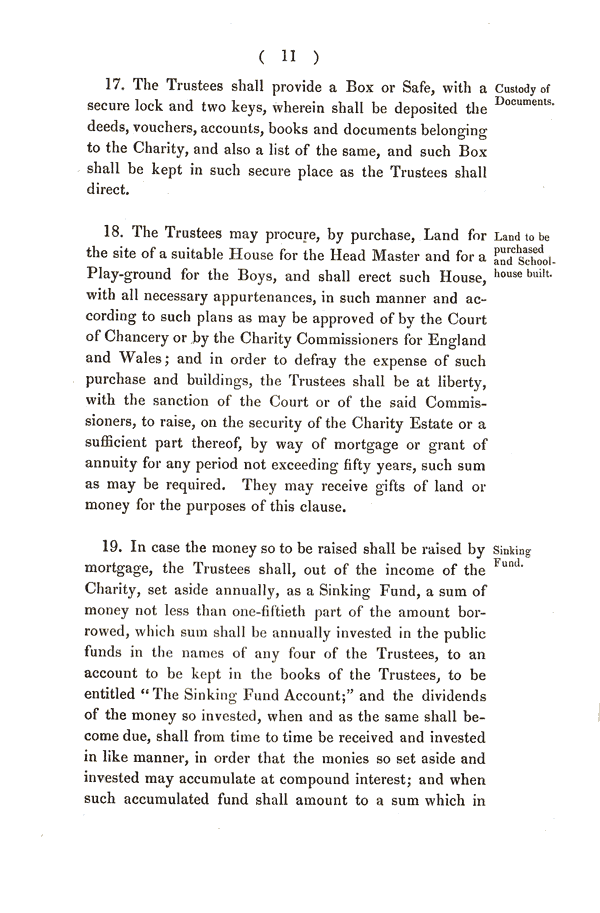
In 1858, the Scheme for the Management and Regulation of the Free Grammar School at Burton-on-Trent was produced and approved by The High Court of Chancery.
I would urge that you take the time to read it – it makes for a fascinating read:
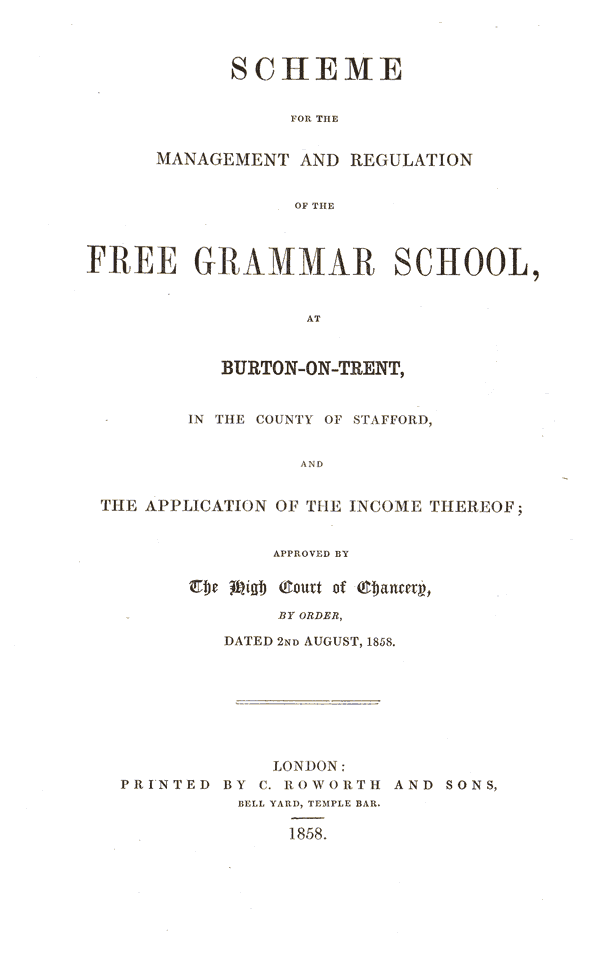
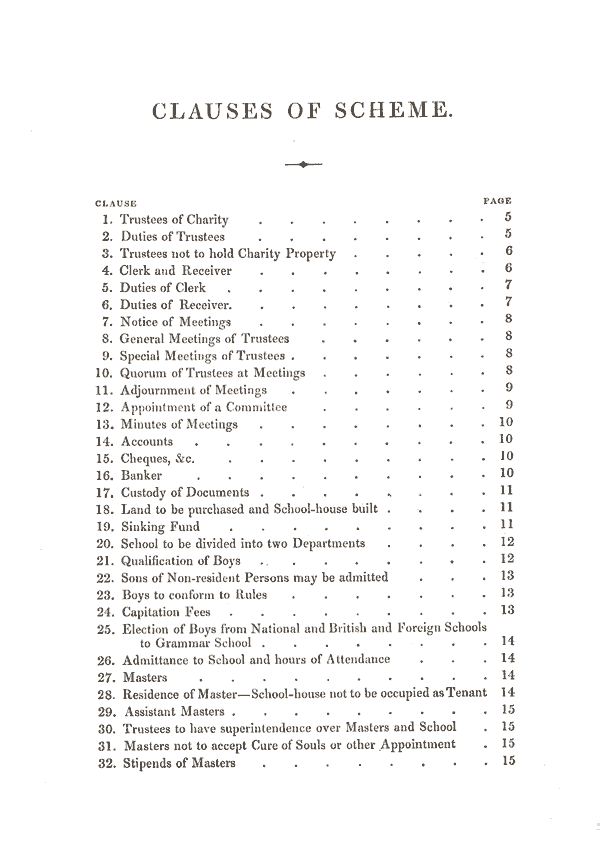
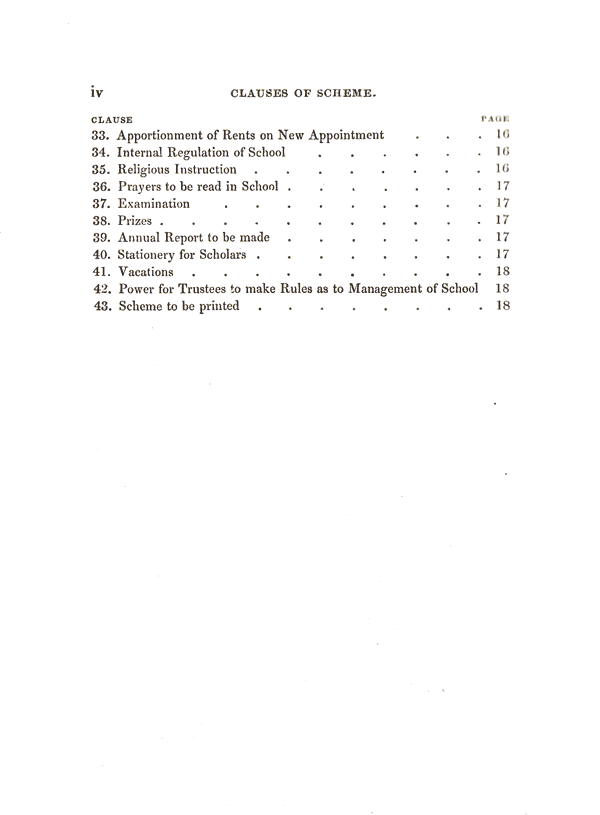
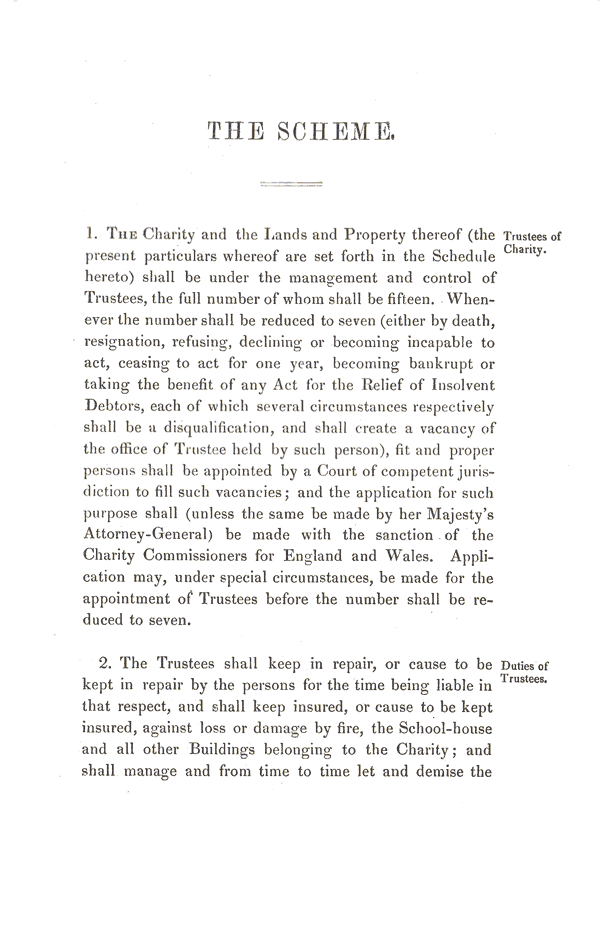
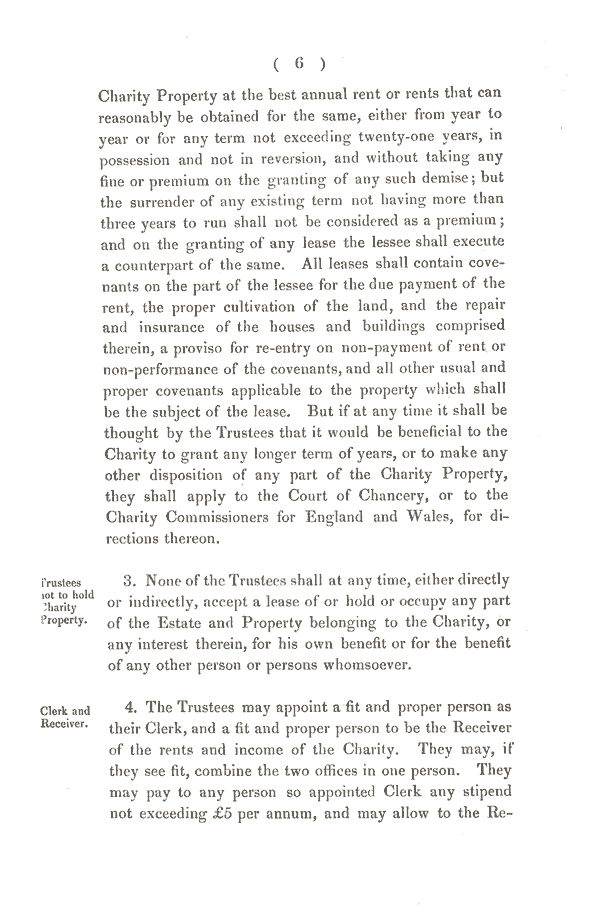

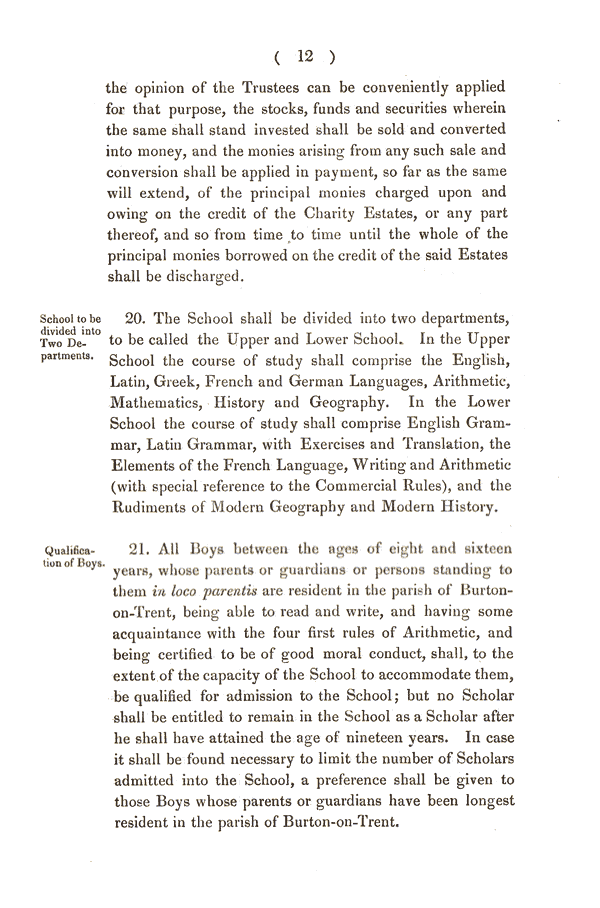
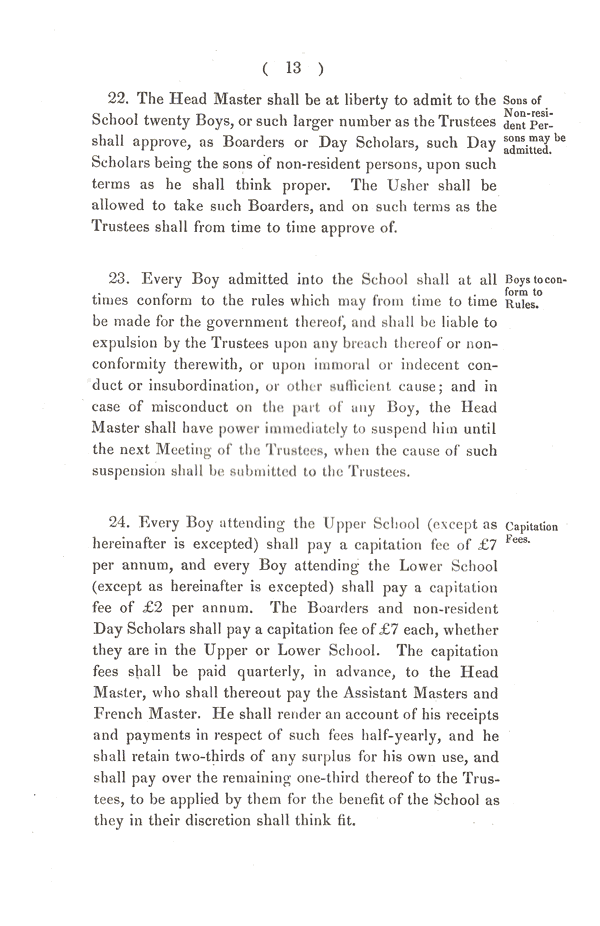
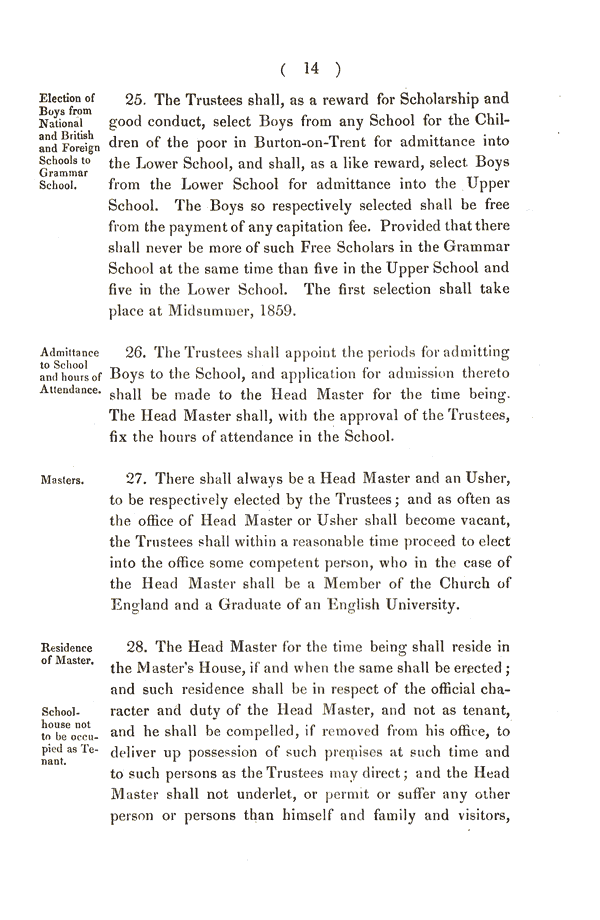
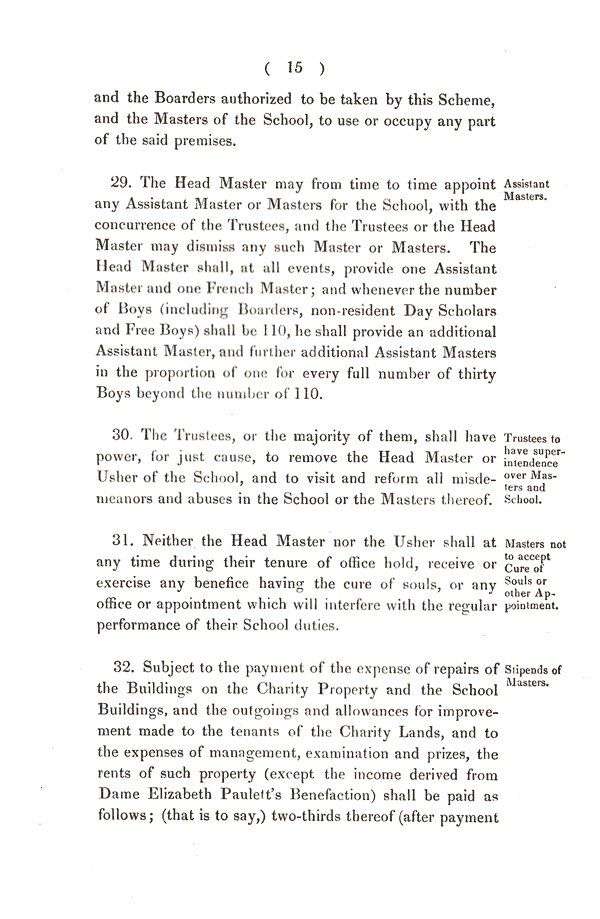
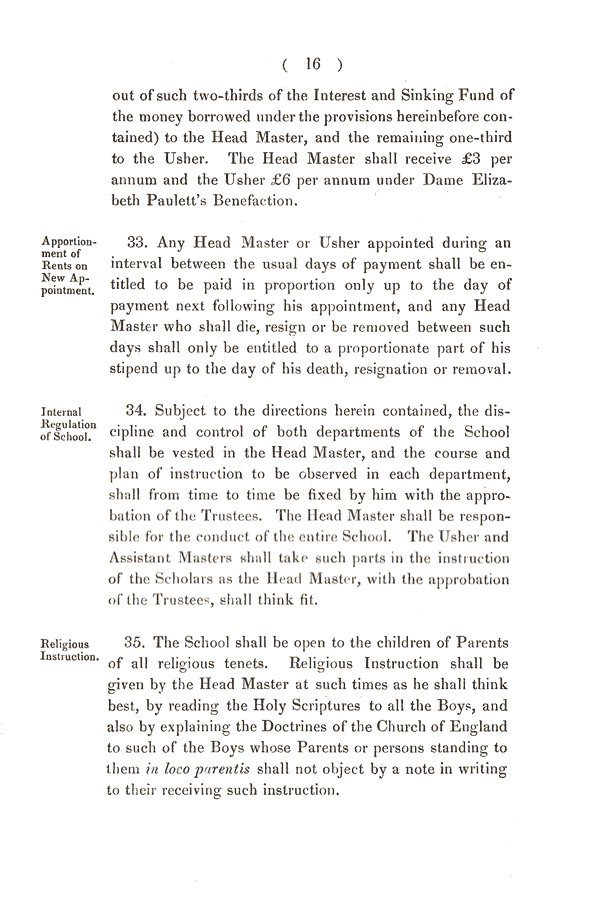
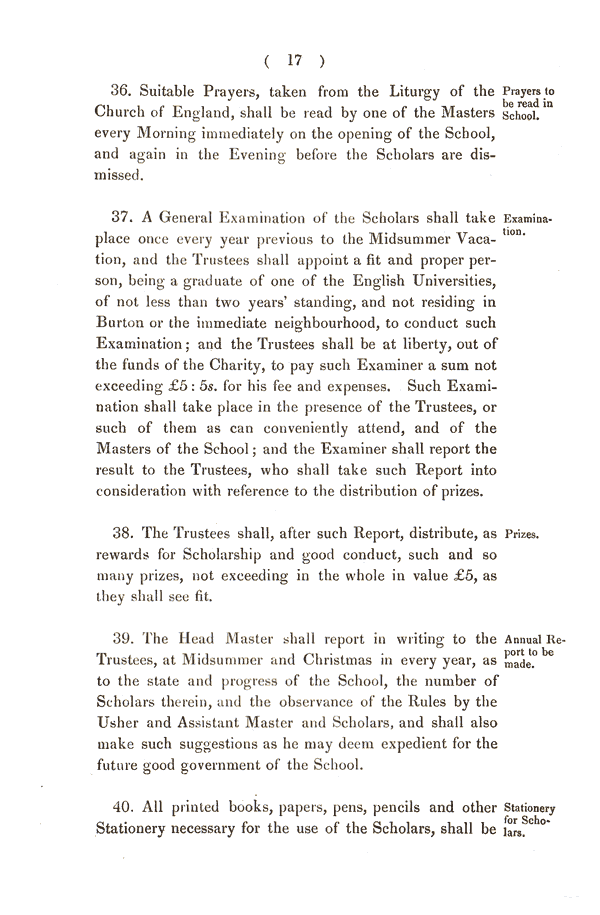
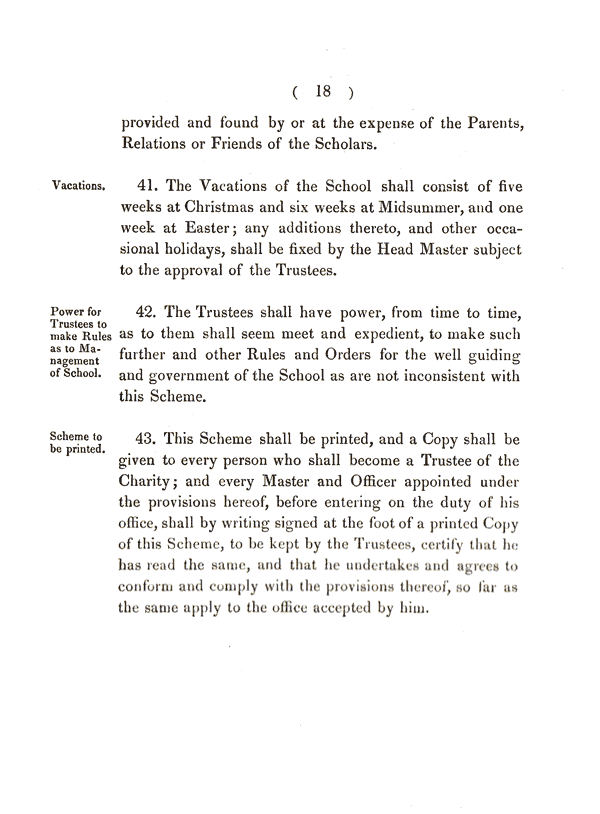
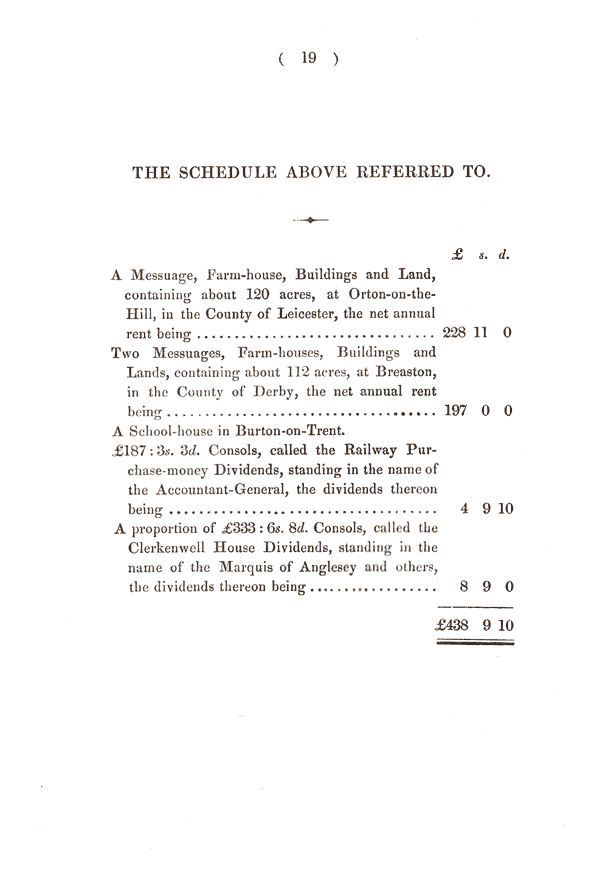

In 1858, the Scheme for the Management and Regulation of the Free Grammar School at Burton-on-Trent was produced and approved by The High Court of Chancery.
I would urge that you take the time to read it – it makes for a fascinating read:
The School Regulations for the late 1930s and early 1940s provide a good feel for the school in those times.
The standard fee which applied to almost all pupils was Five Guineas (£5.25) per term – not including text books on top of which had to be paid 9d (3.75p) for the Cygnet magazine subscription and 1 Shilling (5p) for the Hospital – a not insignificant fee at the time!


Just to put all of this in context – at the time:
 An average three bedroom semi-detached house would be around £550
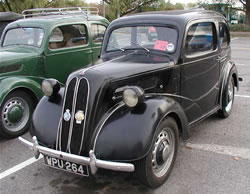
A new Ford Anglia de Luxe family car would set you back £140 and to keep it going, petrol was 1 shilling and sixpence a gallon (1.65p per litre).
Boy’s Flannel suit 25/-, shirt 7/6, jumper 7/6, shoes 16/- (total £2.80).
Mars bar from the tuck shop 6d (2.5p)
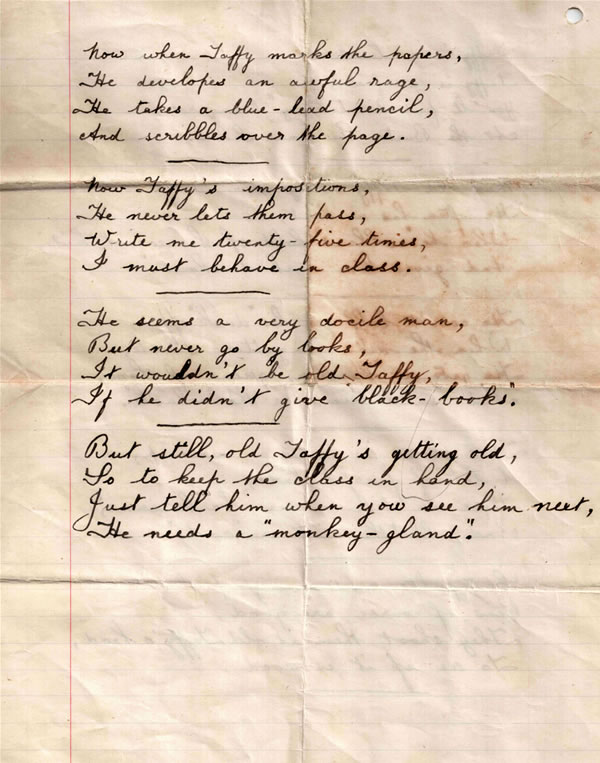
The following poem, which has managed to survive trapped inside another item for over 75 years, probably didn’t make it to a 1933 Cygnet although it does provide a fairly clear picture of one boy’s feeling towards Taffy Davies (probably in the wake of being repremanded by him!). Long before my time so I can’t really comment.
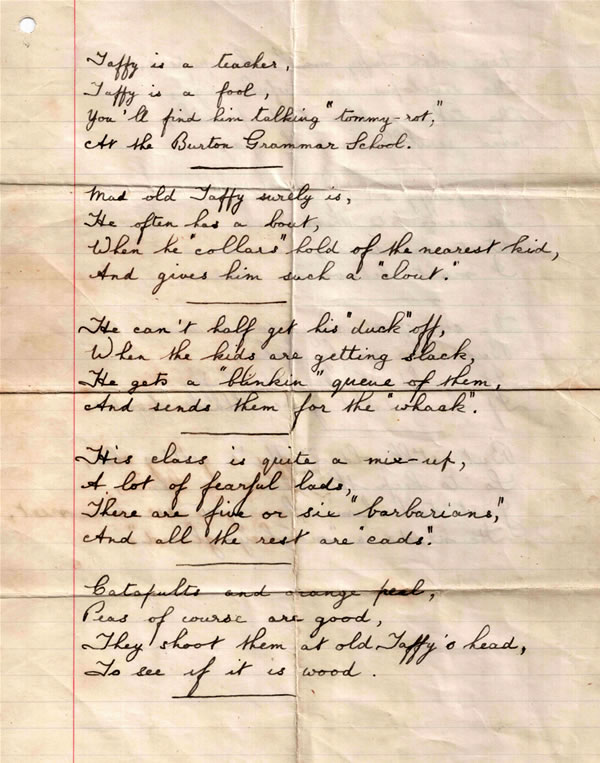
Taffy is a teacher,
Taffy is a fool,
You’ll find him talking “tommy-rot”,
At the Burton Grammar School.
Mad old Taffy surely is,
He often has a bout,
When he “collars” hold of the nearest kid,
And gives him such a “clout”.
He can’t half get his “duck” off,
When the kids are getting slack,
He gets a “blinkin” queue of them,
And sends them for the “whack”.
His class is quite a mix-up,
A lot of fearful lads,
There are five or six “barbarians”,
And all the rest are “cads”.
Catapults and orange peel,
Peas of course are good,
They shoot them at old Taffy’s head,
To see if it is wood.
Now when Taffy marks the papers,
He developes an awful rage,
He takes a blue-lead pencil,
And scribbles over the page.
Now Taffy’s impositions,
He never lets them pass,
Write me twenty-five times,
I must behave in class.
He seems a very docile man,
But never go by looks,
It wouldn’t be old Taffy,
If he didn’t give “black-books”.
But still, old Taffy’s getting old,
So to keep the class in hand,
Just tell him when you see him next,
He needs a “monkey-gland”.
The following text books were in use in 1900. Tantilizingly, some of these books are still obtainable from book collector websites.
Maths
A Treatise on Arithmetic – James Hamblin Smith
Exercises in Algebra – James Hamblin Smith (Later re-published by Hall and Knight).
Euclid – Isaac Todhunter (Euclid was still fashionable to be eventually replaced by general geometry).
Elementary Trigonometry – Hall and Knight
Differential and Integral Calculus – J. Edwards
Science
The Elements of Statics and Dynamics I & II (Mechanics) – S.L. Loney
Heat for Advanced Students – Edwin Edser
Modern Chemistry (!) – Henry Roscoe
Other
French – Chardenal for Grammar and Sentences. Set books for Cambridge Local.
Latin – Kennedy’s Latin Primer, Caesar to Division III. Gepp’s Latin Prose. Vergil, Ovid and Cicero for Divisions I and II.
English – West’s Grammar. Verity’s Texts for Shakespeare.
History – Ransome.
Geography – Longman’s series for political and physical geography.
In the 1880s there was a school magazine called ‘The Lyre’. This was leather-bound and hand-written and illustrated so was not distributed in any number and soon ceased production.
There was another attempt to get a school magazine off the ground was in 1905. At a meeting in the Chemistry Lecture room, H.S. Staley was appointed as its first editor. He left at the end of that year to go to Birmingham Univerisy and later, to Cambridge and was succeeded by Aubrey Baggley. Mr W.T. Jeffcott who taught Latin, French and Shakespeare at the time, contributed an ‘Acrostic’, which were fore-runners of the modern day crossword, but he insisted on it not being published in his name. Despite the initial enthusiasm, it was only short-lived.
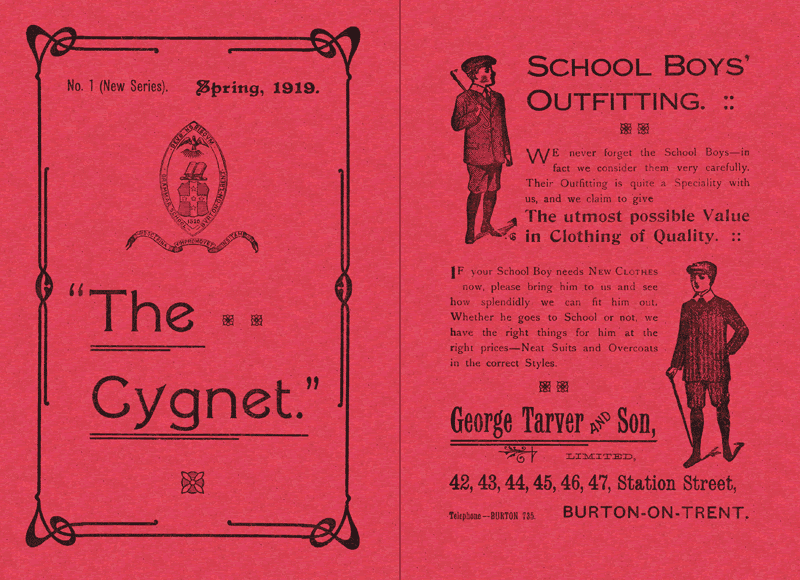
The first Cygnet, Spring Term 1919 – Issue 1
The next attempt was following the end of World War I in 1918. The end of the war prompted form 5B to cobble something together using exercise book covers with loose sheets stuck together and sew in. The first issue was signed by all 22 members of the class. Advertising had been offered at 1d for the first twenty words. Rather ambitiously, it was intended as a weekly journal but this quickly faded away and stopped after just six weeks. The magazine had though, caught the eye of the Headmaster of the time, Mr R.T. Robinson who fully endorsed the idea of a school magazine and decided to add some official weight to it and appointed himself as Chairman. Pupil, Waterton was appointed Editor with Richards as Sub-editor and Mr Parkin as proof-reader. Also appointed were a Treasurer, Assistant Treasurer, Copy collectors (one in each form). The magazine at last had a solid footing and the result was the ‘Cygnet’, Spring Term 1919 – Issue 1.
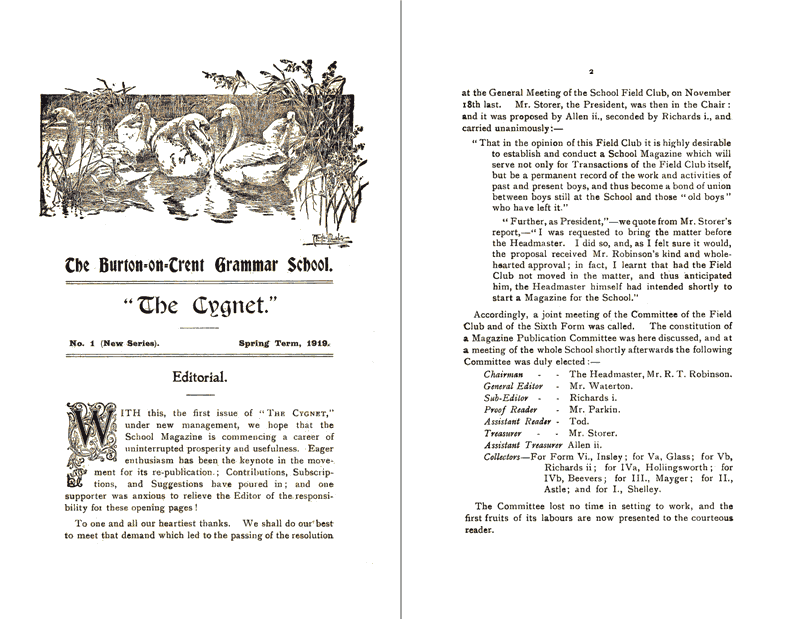
The first two pages of the first issue
Very soon, it became an integral part of the school and a compulsory subscription required that every member of the school had to pay each term as part of the school regulations.
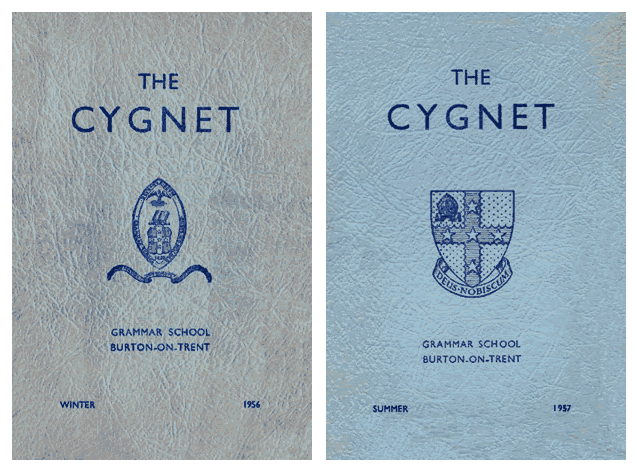
In 1957, the school crest was changed and the cover was given a fresher colour
This was to run with Spring, Summer and Winter term issues almost until the very end of the Grammar School with the final issue in Winter 1974.
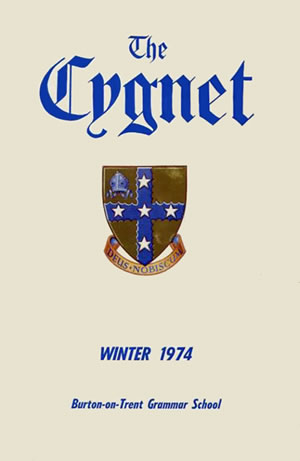
The final ‘Cygnet’ just before the closure of the Grammar School
(* a PDF copy of this is available on request but too large to feature)
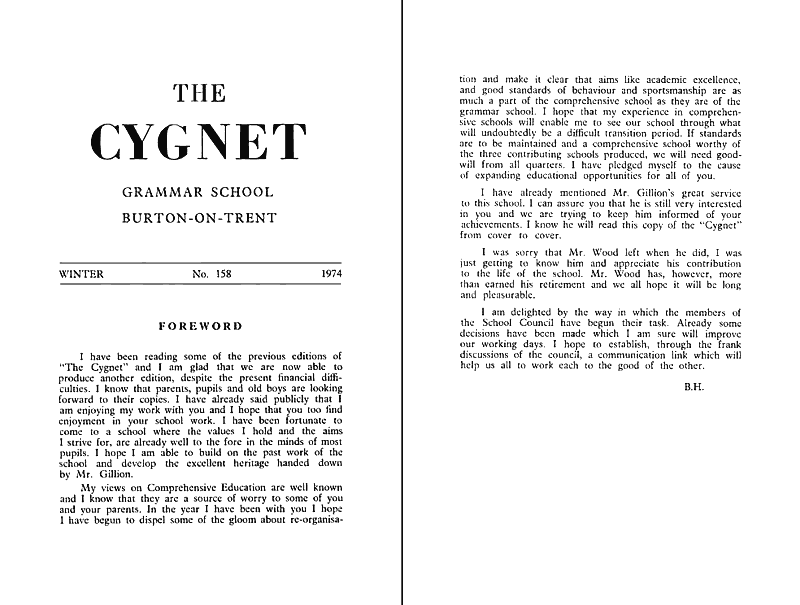
The first two pages of the last issue: Foreword by Brian Harris (Headmaster)
This first form school report for 1951 gives some idea of the curriculum.
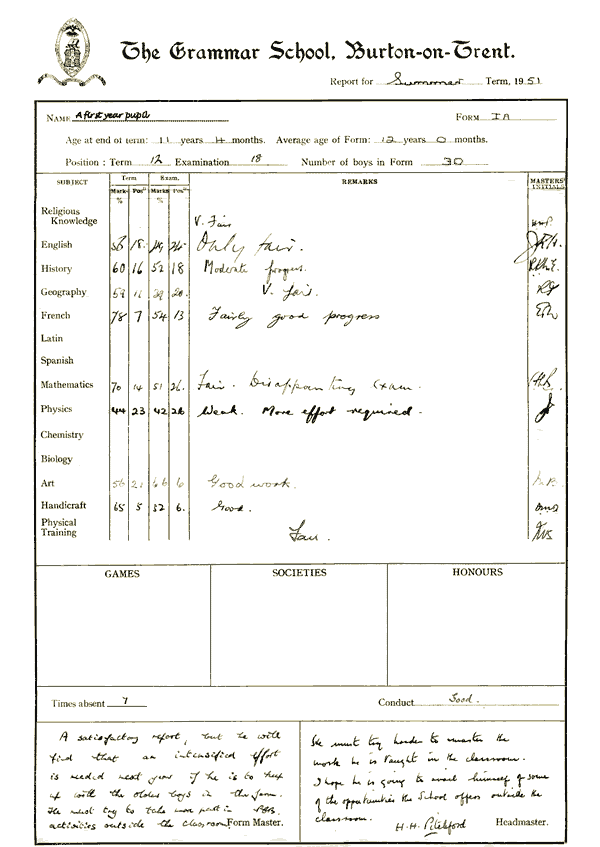
Form Teacher: A satisfactory report but he will find that an intensified effort is needed next year if he is to keep up with the older boys in the form. He must try to take more part in activities outside the classroom. (Percy Barratt).
Headmaster: He must try harder to master the work he is taught in the classroom. I hope he is going to avail himself of some of the opportunities the school offers outside the classroom.
H.H. Pitchford (Headmaster).
Subjects taken can be seen to include:
With Latin, Spanish, Chemistry, Biology to come later.
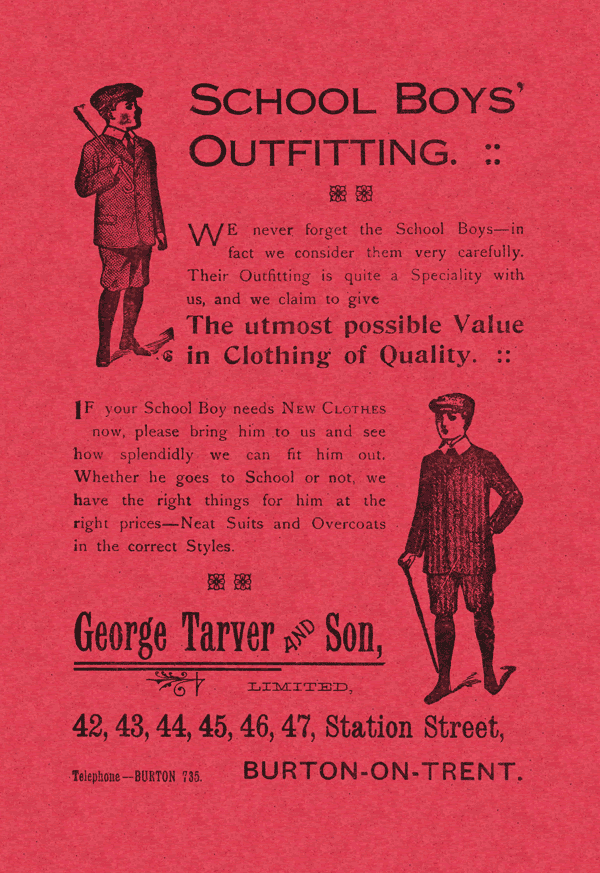
This advert appeared on the cover of the very first issue of the Grammar School Cygnet magazine in Spring 1919.
Aside from offering the ‘utmost possible value’, which I’m sure it was, there are unfortunately no prices. It is also interesting to note the Telephone number as simply Burton 735. In later adverts, telephone numbers are changed to 4 digits, still not quite seeing the need for more than 9999 telephone numbers just to service Burton!
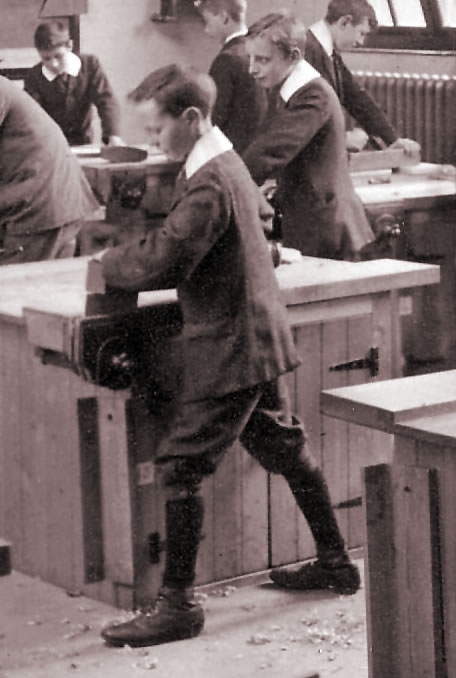
Just to prove that it was not simply Tarver’s fantasy that boys should be attired as shown, this Burton Grammar School picture from around the same era proves that pupils really DID go to school dressed as ‘Little Boy Fauntleroy’!
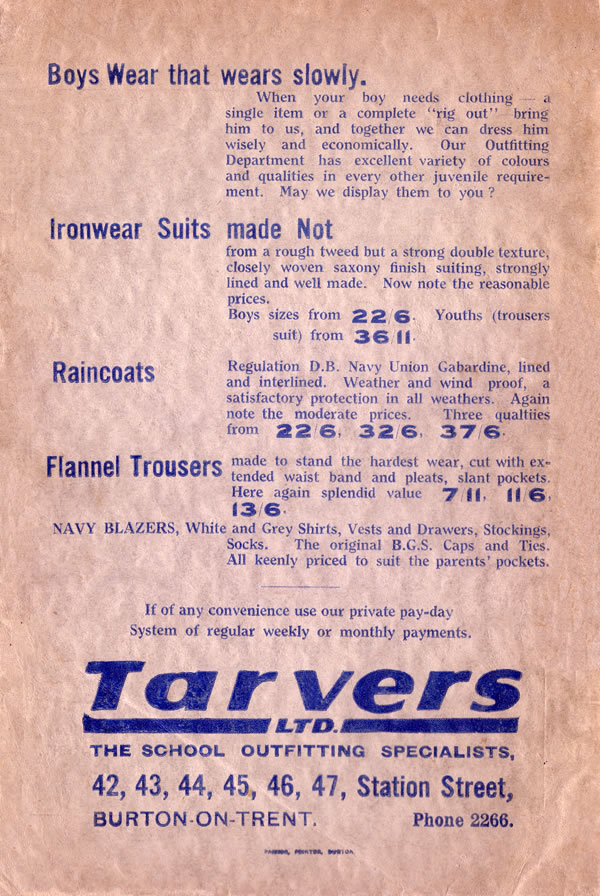
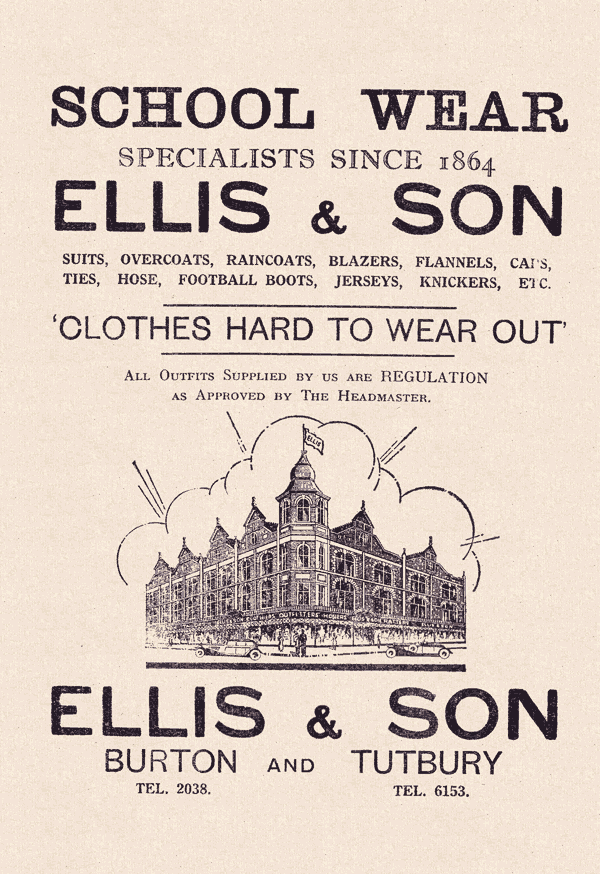
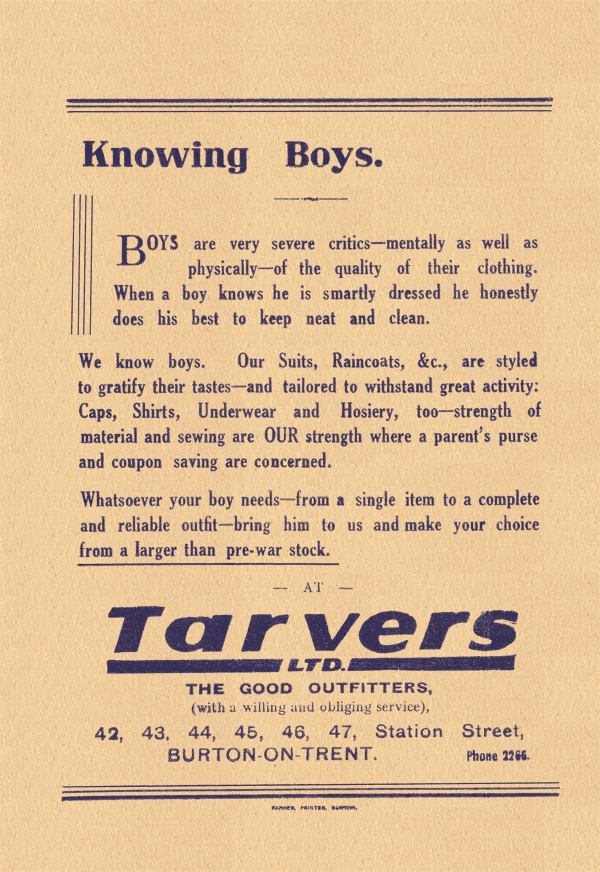
For some years, Tarvers ran a series of adverts on the cover of the Burton Grammar School Cygnet magazine.
Tarvers were the slightly cheaper alternative to Ellis & Son. The difference in quality however, was discernible, in particular, the school cap with the Tarvers offering having a broader band and sitting awkwardly on the head. Many pupils persuaded parents to buy an Ellis & Son cap – the forerunner to designer labels!?