


Back Row: Frank Read, Philip Bond, AJ Smith, ‘Killer’ Corby
Front Row: T. Fletcher, R. Garnham, H. Griffiths (Capt), A. Kidger, B. Evans
Burton Grammar School Master (Geography / History 1920-1960)
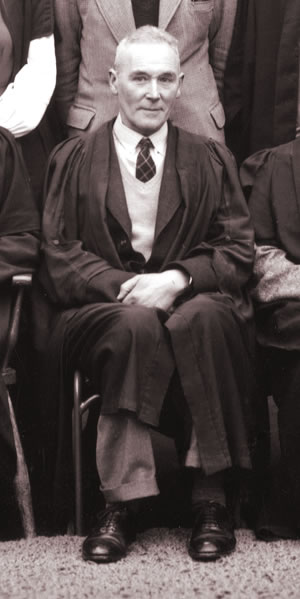 Cecil was born in Oxford, son of a watchmaker. He went to school in Oxford, and later worked in the library of St Edmunds College. Both he and his father were keen fishermen and cyclists. He cycled all over Oxfordshire and the Thames valley in the days of bumpy roads and mostly horse-drawn traffic.
In the war of 1914-8 he enlisted in the Queens Own Oxfordshire Hussars (aka queer objects on horses) and served in France and Belgium. The days of cavalry charges were over but horses were essential for moving armaments and supplies to the front and bringing back casualties in the atrocious conditions.
After four years of service in the war, in 1920, he took a post-war emergency degree at St. Catherine’s College, Oxford, which served students ordinarily resident in the town; he went on to train to be a teacher.
He took a post as history teacher at the BGS. He met and married Elsie Allen, daughter of the Borough Treasurer, Sidney Allen who had seven daughters at the High School and three sons at the Grammar.
Cecil was known to boys as Chas or Chazza. He stayed in the same job until 1960, along with Frank (Bill) Read, Jake Hammond, Nicholson, Dai Davies, Ron Illingworth – the long stayers. He taught mainly History and Geography up to School Cert – later GCE O-level, but on occasions he also taught English, French or RI.
Probably because of his ordinary degree, he rarely taught the A-stream and never the 6th form. He struggled to get the Bs and Cs to understand the world and get through their School Cert or O-levels. He was probably more interested in the kids and current affairs than in his subjects, though he saw these as essential background knowledge for understanding government and world affairs.
He was able to add colour to 20th century history by having lived through it. He would have remembered the death of Queen Victoria, if not her jubilee. He experienced the horror of WW1 as a private. He remembered the public mood and the newspaper reports during the general strike, the depression and the rise of fascism.
Because of his experiences in WW1 he was strongly in favour of the League of Nations and later the United Nations and he supported the Labour party. He was in trouble in the 30s when he clashed with Burton politicians and the local Tories tried to get him sacked for allegedly getting schoolboys to disrupt their public meetings. Fortunately they were wrong and they failed.
Tennis was his life-long sporting activity but he was an all-rounder, being a keen angler, a tireless walker, a cyclist and a camper. He was also a stout advocate of the League of Nations, the United Nations, UNESCO — and privately, a beekeeper, a gardener and a motorist. His motoring career began when he bought a second-hand car, and a colleague gave him an hour’s lesson on how to drive it; the next day, he drove it from Burton to Oxford, with the whole family on board!
At school he looked after the library and ran the International Relations Society, encouraging pupils to interest themselves in politics and world affairs. He was very suspicious of closed minds, received opinions and humbug and liked everyone to think things through properly. He was unimpressed by religious truth. Look at all these religions and sects claiming to have exclusive truth: they can’t all be right, but they could all be wrong.
In WW2 he was in the Home Guard and ARP and dug for victory with the rest. He kept chickens, ducks and rabbits and for several years kept bees. He was a keen angler and cunning tennis player.
In 1948 his pituitary gland stopped working and his joints started to grow. It was a worrying time but new drugs were found to bring the disease back under control. He was left with exceptionally large hands, which are remembered by some old boys who might have had their ears boxed.
He enjoyed his work, particularly helping his pupils develop from timid boys to almost respectable adults, and he continued working for two years beyond the retirement age. Retirement was devoted mostly to gardening, fishing and keeping up with friends and relations.
The Library was his hobby in school, for he was Librarian from 1926 to 1959. If Mr. Brown was wanted, the most likely place to find him was browsing in the library.
After retiring, Mr. Brown was still very much an active retired member of Staff and enjoyed to visit the School on numerous occasions to see how it was doing without him.
Cecil had three children: Bernard went on from BGS to Christ’s Hospital School. He won a scholarship to Balliol College Oxford but his studies were interrupted by war service in the far east. He was a career Civil Servant, sometime Chief Statistician at the Treasury. Audrey was Head Girl at the High School. She took a degree in French and taught French in various schools, including BGS for a short while. Graham went from BGS to Denstone College, thence to Jesus College, Cambridge to read Maths. He worked in computer software development and research and contributed to international standards in database and communications.
Burton Grammar School Master (Chemistry 1963 – 1975)
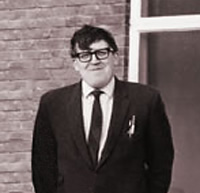 Brian Luckett was born in 1940 in London, and evacuated first to Newquay, Cornwall and then in 1944 to the very contrasting Colne in North East Lancashire. He was to remain in Lancashire and, during his teenage years, lived close to Pendle Hill where he attended Colne Grammar School. He was a very keen Burnley supporter at this time, always watching them play on a Saturday afternoon, often having played rugby in the morning at school. To this day, despite no longer being able to name any of the players, he finds himself habitually checking on Burnley’s results.
Brian had a very influential chemistry teacher, who made chemistry very interesting and exciting and he opted to take it at ‘A’ Level with a view to reading it at University. It was working in the textile mills of Colne during his school holidays that made him want to specifically read Textile Chemistry . In the noisy environment of clattering looms, spinning and carding machines, he became a very good lip reader which, he claims, helped him on numerous occasions in the classroom!
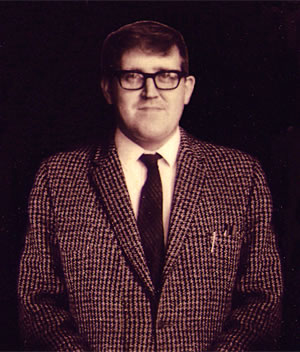 Brian obtained a BSc (Tech) degree in Textile Chemistry at the University of Manchester Institute of Science and Technology. At this time, the textile industry was going through a crisis and he decided to do a one year Postgraduate Certificate in Education at St. Luke’s College, Exeter. He had little chance of making the college rugby team though with the likes of Don Rutherford and Mike Davis (both future England captains) securing places. It was a much higher standard than the rugby he had enjoyed at school and university. His main teaching practice was at the Technical High School in Torquay.
Mr Luckett had anticipated working in the south west but was attracted by a post at the Burton Grammar School in 1963 to replace the departing Dennis Grimsley which he applied for and was successfully appointed.
The Head of Chemistry was Norman Jones. Also teaching chemistry at the time was Gareth Woods with whom Brian found himself sharing a flat in Blackpool Street. Before long however, Mr Woods was to accept the post of Head of Chemistry at Soham Grammar School in Cambridgeshire meaning that Brian was promoted to second chemistry master and Mr C. Heighington was appointed third.
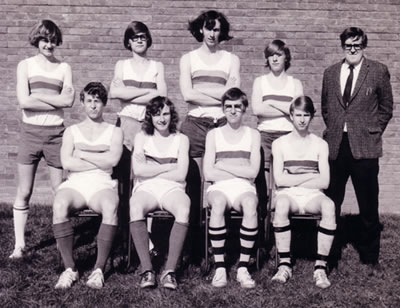 Shortly after starting, he was persuaded by Headmaster, Bill Gillion, to take charge of Cross Country. It was a burden he was never really happy with although he can recall many fond times with the likes of Peter Rose, Robert Barningham and David Van Der Merwe in the first eight. In particular, he remembers “a small spindly lad called Chadfield” being a superb terrier who joined the Royal Navy and was found to have TB. He could well have competed at international level had he been treated earlier.
He never actually ran round any of the courses, instead, he used to drive to the back of Newton Solney to shout support at the poor unfortunates (eminently more sensible). He even sympathised with those that took short cuts as he had done the same at his school, once falling in the canal. Brian was also happy to occasionally drive some of the chess team to away matches at other schools such as Bemrose, Derby School and Repton.
Brian recalls almost being expelled whilst in the 6th form for nearly setting fire to the school chemistry Lab! Having read that if you wrapped some sodium peroxide in wet newspaper it would ignite, he and a friend tried it but with little effect. The teacher, Mr ‘Aldophous’ Smith, shortly came into the laboratory and they threw the paper under a desk close to a radiator. Part way through the lesson, flames suddenly appeared as the correct moisture content was achieved.
With this in mind, he smiles at some of the ‘unofficial chemical experiments’ by pupils at the Grammar School during his time: The banned carbylamine reaction, on putting the constituent reactants down various sinks around the lab, when they all met up in the main drain, the really awful smell was generated in the lower corridor; the manufacture of highly explosive nitrogen tri-iodide powder to be distributed around the school. The staff had to pretend to be cross but couldn’t help but smile.
Brian reflects on what current day health and safety inspectors would make of boys sitting on their stools on top of the benches to watch the practical demonstrations without a safety screen. At the same time, he feels that the complete sanitisation greatly diluted the excitement of the subject that had encouraged previous scholars to take up careers within the chemical industry.
In 1966, Brian married Shirley, the Secretary of the Girls High School, at All Saints Church. Michael Thompson a pupil at the Grammar School played the organ at their wedding. The thought of this leads him to again reflect on many aspects of his time at Burton Grammar School which would seem incredible in the light of today’s educational system but which may well have defined the ethos of the school at that time: How well he, and other members of staff, got on with the boys and their families; how most teachers lived fairly close to the school without any thoughts of being in any way harassed by any of the pupils. He is sure that the chance meeting of boys and parents out of school was very healthy for the discipline and behaviour of school life. To this day, some forty years later, the Luckett’s are still occasionally visited by pupils or their parents, such as Peter Rose’s mother.
Like a number of schoolmasters, Brian also references the Burton Rugby Club as a bonding influence. Staff and pupils were given time off on numerous occasions to, for example, go and watch Burton play an Oxford University XV at Peel Croft, often featuring ex-pupils. It was also host to the Old Boys matches which kept the school’s rugby tradition alive.
On a couple of occasions, Mr Luckett tried to leave Burton Grammar School for higher posts in other schools but Bill Gillion, countered with the offer of a rise in the grading of his current post. He was never quite sure whether this was because of how highly the young staff were valued or whether the headmaster preferred the ‘devils he knew’.
In the early seventies he started the Wildlife Club on the request of pupils Beard and Eaton and, together with Colin Bagshaw, took boys on bird-watching trips to the Norfolk Broads, Slimbridge and other reserves – another “wouldn’t happen today”! ‘Plant a tree in 73’ was one of the catch phrases that helped the small group plant hundreds of trees at the RSPB bird reserve at Coombes Valley in North Staffordshire. To this day, he vows to one day go back to see how they have grown.
He left the school at the end of the final year of Burton Grammar School in 1975 after an offer by Jack Adams, who was a good friend of Norman Jones and the husband of Peggy Adams, head of Physics at the Girls High School, to be Head of Chemistry at Shelton Senior High School in Derby which he accepted. He had been offered the same post two years earlier but had been persuaded to stay.
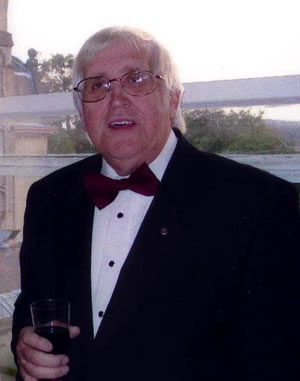 Brian was to remain there for fourteen years, before transferring to Wilmorton Tertiary College in 1989. He finally retired from teaching in 1995, but carried on marking ‘A’ Level Chemistry papers for the Cambridge Board for a further six years.
He looks back at his twelve years at Burton Grammar School as being the happiest of his thirty-two years in teaching and has never regretted taking up the post. The Lucketts and Bagshaws remain good friends together with the once assistant secretary of Burton Grammar School who was largely responsible for his meeting his wife.
Brian enjoys an active retirement being very keen on reading naval fact and fiction, pottering on his allotment and snoozing in his shed, family history, toy and model making and, at the time of writing, is President of the Ashby Rotary Club.
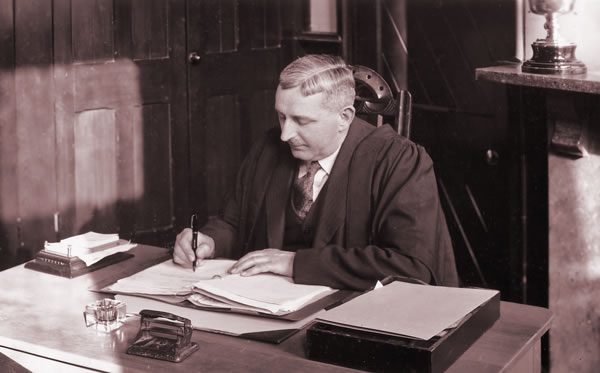
Herbert Pitchford – The last Headmaster at the Bond End School
Reverend Francis Edward Jackson Valpy (1839 – 1843)
Rev. F.E.J. Valpy was the son of Rev. Dr. Richard Valpy who was for many years, the Headmaster at Reading School and one of the founders of the public school system.
On the death of his father, Francis succeeded him. He was by this time himself a Greek scholar of some repute and had published several textbooks on the subject that had been adopted by a number of schools as the ‘standard’ work.
He lacked however, his father’s gift for teaching and organisation and during his time as Reading Headmaster, the number of pupils decreased from over 200 to just 30. He moved to Burton Grammar School to take the vacant headmaster post! This he was able to do largely through his brother-in-law, Rev. Peter French who was successful in his post at Stretton.
Francis Valpy was however, no more successful than he had been at Reading and once again, the school fell into decline with a greatly reduced number of pupils. He only managed to survive for four years by which time, there was considerable pressure for him to be replaced.
The only known account of him reads “He is only remembered for his very tall beaver hat with neither crown nor brim, referred to as ‘the chimney-pot’, and his swallow-tailed coat with shiny buttons which he wore as everyday wear”.
Reverend John Fisher MacMichael (1843 – 1851)
Reverend J.F. MacMichael was a very different character to the Headmaster he replaced. He was educated at Richmond School in Yorkshire following which, he entered Trinity College, Cambridge in 1833. He graduated in 1837 having during his time there, been awarded second prize for English Declamation. From Cambridge, he was Master of University College, London. He was the author of an edition of ‘Xenophon’s Ananasis’ and an edition of the Greek New Testament.
Shortly afterwards, he spent three years at sea, from 1838 to 1841, as a naval instructor.
In 1842, he took the post of Vice-Principal at Hull College. Just one year later in 1843, to accelerate his career, he successfully gained the position of Headmaster at Burton Grammar School to replace the ineffective Rev. F.E.J. Valpy.
He stayed at Burton Grammar School for eight years before leaving in 1851 to become Headmaster of the much larger and more prestigious Grammar School in the cathedral city of Ripon in the Harrogate district of North Yorkshire. He was also appointed curate of Monckton, Ripon. He eventually became Honorary Canon of Ripon Cathedral and died there in 1872. He was buried in the Cathedral’s burial ground.
Reverend Stuart H. Fagan (1851 – 1855)
Reverend S.H. Fagan joined the school at fairly short notice on Rev. J.F. MacMichael’s relatively unexpected departure. Little is actually recorded of Rev. Fagan other than his reign as Headmaster only lasted four years and he was replaced in 1855.
It is known that his son, H.M. Fagan attended Burton Grammar School from around 1868 before going to Worcester College, Oxford, which suggests that after leaving Burton Grammar School, Rev. Fagan remained in Burton concentrating on his work within the church.
Reverend Henry Day (1855 – 1873)
Reverend Henry Day was the son of Rev. Thomas Day of Mendlesham in Suffolk. He was educated at Harrow for whom he played cricket. He won a College Scholarship in 1846 where he gaind a number of prizes for English and Latin. He won the Chancellor’s Medal for poetry in 1848 and a first class Tripos in Civil Law. He later won the English poem prize twice (beating Tennyson himself who only won it once!). He was admitted to the Inner Temple and ordained deacon by the Bishop of Norwich in 1851.
From here, he became curate of Drayton, Berkshire and second master of the associated Abingdon School.
He finally arrived as Headmaster of Burton Grammar School in 1855 and was to remain there until his early retirement in 1873 at the age of 46. He was to remain in Burton for the rest of his life until his death in 1893.
Charles Undershell Tripp (1873 – 1884)
In-progress
Reverend Thomas Wall Beckett (1884 – 1900)
Reverend T.W. Beckett was born at Wellington, Shropshire in 1836.
R.T. Robinson (1900 – 1930)
In-progress
Sydney Ernest Wilson (1930 – 1935)
Sydney E. Wilson was educated at Christ’s School in Sussex where he enjoyed both sporting and academic success gaining, representing the school in both Rugby and Cricket and secured a place at Cambridge to read Matematics; he was also a member of the school orchestra with an interest in music.
His education was interrupted in 1917 to take up service in France during the First World War before returning in 1919 to resume. At Cambridge, he gained a First Class Mathematics Tripos and published a number of maths papers. He also gained a BA degree in 1922 and an MA in 1928.
He became Senior Maths Master at Blundell’s School. This was a prominent public school, sometimes referred to as ‘The Eton of the South-West’ located in Tiverton, Devon.
He was appointed Headmaster of Burton Grammar School in 1930, with the tough job of stepping into the shoes of the very popular and highly effective Mr R.T. Robinson. He remained in the post for five years during which time, the school pupil population exceeded 300 for the first time. He left in 1935 to become the Principal of King William’s College on the Isle of Man. He finally passed away in 1973.
T.W. Parkin (acting) (1935 – 1936)
W.D. Fraser (1936 – 1941)
Harold Stephen Moodey (1941 – 1950)
Harold Moodey was educated at Chatham House Public school where, aside from being an outstanding scholar, he was senior prefect, captain of cricket and captain of football.
He gained an Open Scholarship to Oxford and took first class honours degrees in Natural Science and Chemistry. He entered Jesus College, Oxford and was there were war broke out. He then ‘enjoyed’ distinguished service in the Royal Air Force. Back in Jesus College after the war, he gained college colours for football and rowing and became president of a number of societies including Oxford Colleges Scientific Club.
As a post-graduate, he wrote a number of papers and textbooks and had a distinguished teaching career as second master of Chemistry at the esteemed Liverpool Collegiate School and Head of All Sciences at Hampton-on-Thames Grammar School.
Colleagues had nothing but good to say about him before he suffered some kind of mental illness and some unsuccessful procedure that had a very negative effect on his mental well-being. He went off sick just before Christmas, 1949, and was reported to be seriously ill. One morning in May, 1950, to the shock of the school, he went to Burton Railway Station and committed suicide by jumping in front of a moving train. When the police visited his Stapenhill home, they discovered the true extent of the tragedy. His wife and teenage son and daughter were all found dead as the result of head injuries.
Herbert Harrington Pitchford (1950 – 1958)
William H. Gillion (1958 – 1973)

Back Row: Bob Fletcher, Andrew Gadsby, Peter Trigg, Bob Taylor, Ian Wooton, Malcolm Campbell, David Burns, Colin Mason, Glynn Hall.
Front Row: Derek Davenport, Rodney Hardwick, Roland Ibbett, John Charles, Ezra Somekh (Form Master), John Neville, Tony Yarranton, Peter Jennings, John Richards.

Back Row: Tracy, Hillyer, Smith, Hicken
Front Row: David Berker, Cyril Edlin (Form Master), Merrick, Bill Royall
Cyril Edlin, Senior English Master, sadly died at his desk less than a year later in 1959.

Back Row: John Birch, Noble, R. Hardwick, David Billings, Bill Royall
Front Row: Peter Ling, A. Gadsby, J. Hunt, Peter Boulton (English Master), Bob Knight, A. Whitaker, A. Phillips
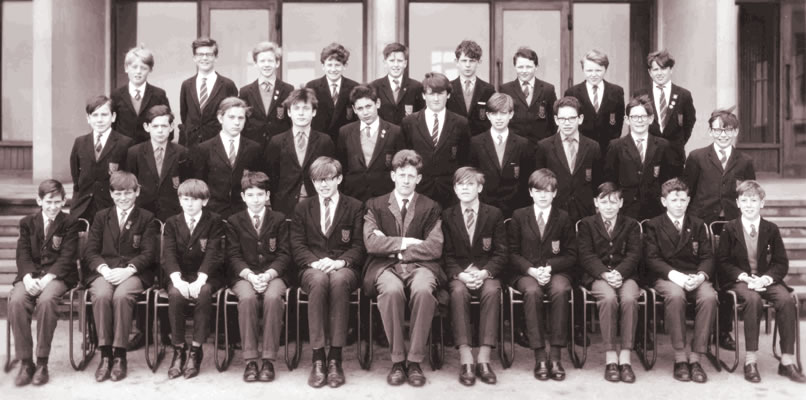
Back Row: Geoffrey Roberts, Derek Rookyard, Bellamy, Pegg, Ching, Terry Royall, R. Deacon, Mike Stannard
Middle Row: Robert Young, Reynolds, Paul Margetson, ‘Ziggy’ Patras, M. Jones, Mick Gee, Bird, Paul Bidder, Haddows, Clive Hardy
Front row: Astell, Chris Taft, Trevor Taylor, F04, Mick Waldron, David ‘Shrubby’ Shrubbs (Form master), Keith Tomlinson, Bryan Huckerby, Large, Matkin, Barnett
 Dennis Grimsley belongs to one of the small number of staff whose association with Burton Grammar School started as a pupil before later returning to the teaching staff.
Dennis was a pupil from 1942 to 1950. He enjoyed good success, being a prefect in 1948/9 before going on to become Head Boy.
Aside from school colours for Rugby, Cricket and Cross Country, Dennis played for Derbyshire Schools Under 19’s Rugby XV in 1948/49 and was team captain 1949/50. He was also winner of the S.J.Ife Memorial cup in 1950 for ‘Best all round sportsman’. In the same year, he also became Captain of Drake Champion in a year when Drake were crowned House Champions.
Dennis gained a place at Nottingham University. He gained a 2nd Class Honours Degree in Chemistry in 1953 and a Certificate in Education 1954 when he was also appointed Chairman of the Education Department.
Soon after qualifying, Dennis served his National Service Commission from 1954 to 56 with the Royal Air Force. He married in 1956, just prior to demobilisation.
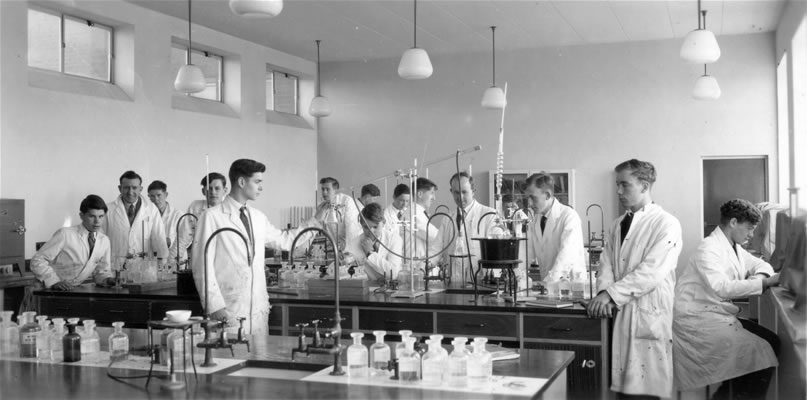 His first teaching post was back at his own Burton Grammar School in 1956 as assistant chemistry master to Norman Jones. He was appointed President of the Old Boy’s Association for 1960/61.
In 1961, Dennis left Burton Grammar School to take up the post of Head of Chemistry at Brunts Grammar School, Mansfield, where he remained until 1970. Following this, he took the post of Deputy Headmaster at Biddulph Grammar School and was ‘Acting Headmaster’ during 1974 until, as part of a reorganisation, he was appointed Headmaster of Blythe Bridge High School. He remained here until 1988.
He was President of Biddulph Rotary Club 1978 – 79 and was appointed a magistrate in 1981 which he served until 2002.
 At various times, Dennis has been ‘Chairman of Probation Liaison Committee’; was ‘Chairman of Youth Panel of Leek’, then Staffordshire Moorlands and North Staffordshire. When this joined with Stoke-on-Trent, he became ‘Vice-Chairman of combined new North Staffordshire Youth Panel’.
 Dennis was appointed a ‘General Commissioner of Income Tax’ in 1993 and became ‘Chairman of the Leek Tax Commissioners’ in 2003, a post he held until his retirement in 2007.
…. to be continued …