Burton Grammar School Master (Biology 1948-1973)
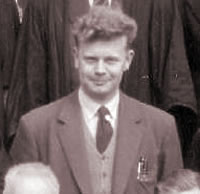 Raymond Crowther was educated at Heath Grammar School in Halifax. He qualified from here for a degree at University College, Durham but, during his time there, war broke out which meant that he was to join the RAF. During the war, he spent most of the time with the coastal command in Iceland. At the end of the war, he made the decision not to go back and complete his degree but rather, to complete teacher training.
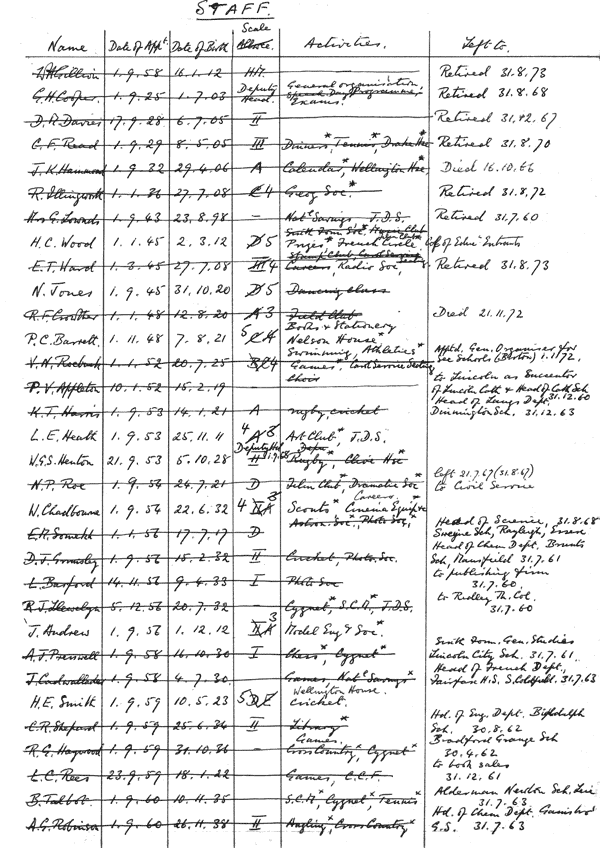
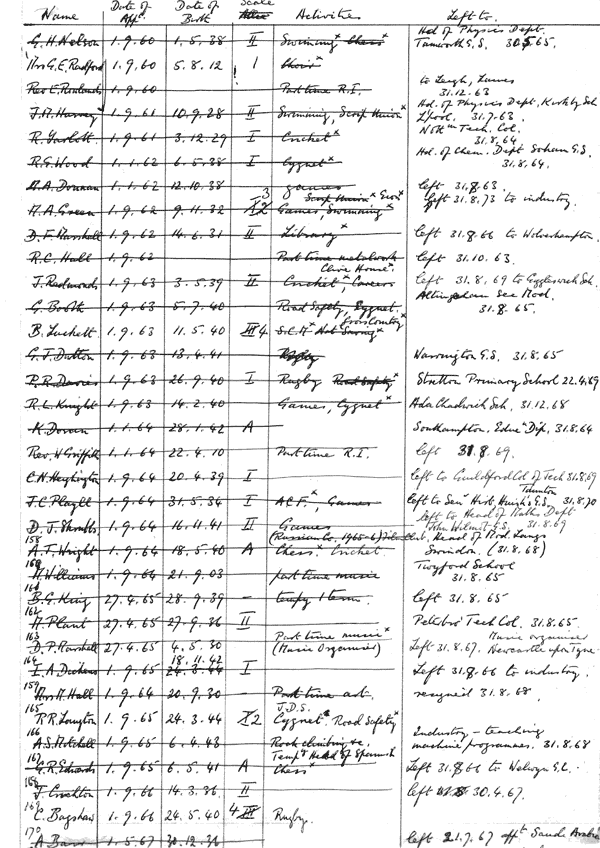
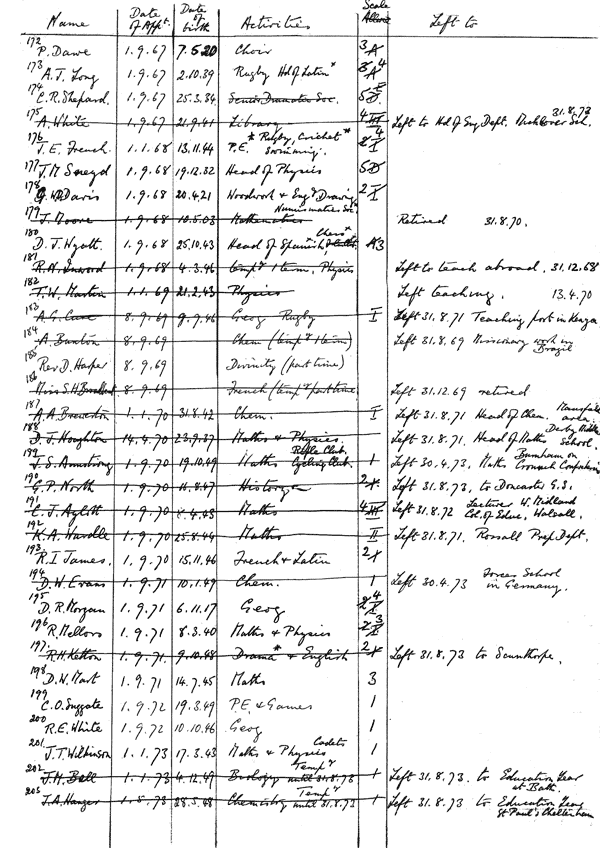
He was appointed as Biology teacher at Burton Grammar School in 1948 and was to go on to complete over 25 years there. He was affectionately known as ‘Joey’, for which reason, I had always assumed that his name was Joseph. It was only in the preparation of this website that I was corrected to the fact that his name was Raymond which just didn’t seem to fit after all those years!
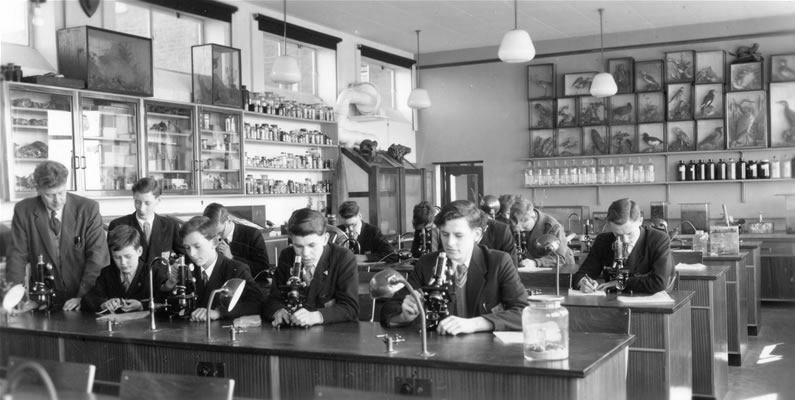
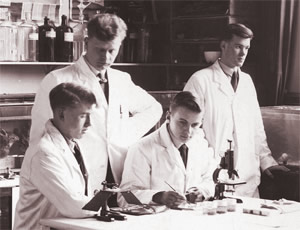 Raymond always had a strong interest in microbiology and in physiology. He had a contact at Birmingham University who supplied a whole range of bacterial cultures which were maintained in the small sanctum off the Biology laboratory at Bond Street. The Grammar School had what would nowadays be considered a quite frightening collection of pathogens. The marine tanks also had an interesting origin. Raymond sourced them from contacts at the Marine Biological Station in Plymouth who supplied carboys of seawater and the specimens of marine life – which were far from easy to keep thriving!
Michael Tanton was one of the first monitors for the Biology lab and remembers the mammoth task of operating the Roneo machine to produce the mountains of typed notes from the stencils he typed out on his portable typewriter. Michael was the first of a number of his students to go to Imperial College, London, to study Zoology, Applied Entomology and Parasitology.
 Raymond’s enthusiasm for his subject was considerable. From somewhere he had acquired a dead dog, and decided that the skeleton would be an excellent teaching tool. The problem was, how to get rid of the flesh? The solution was to ‘let nature take its course’ by allowing natural bacteria and flies to do their job! The dog was ensheathed in chicken wire and suspended out of the lab window, more or less above the door into the cloakroom area and opposite the door to the woodwork room.
The next problem, after a week of so, was Mr Redfern the school janitor objecting strongly to maggots falling from above. A school monitor was despatched up a ladder to deposit the dog on the roof, out of site and out of mind. That is, until complaints from the staff room about the smell pervading the upper floor. At that point, discretion played the better part of valour, and the dog was brought down and ‘spirited away’.
After a stint in hospital, he married Mary, one of the nurses he met there and they moved to a house at the bottom of Ashby Road as their home.
He corresponded with many other educational biologists in schools and universities, including London, Oxford, Cambridge and Aberdeen, who held him in high regard. He was also on the national committee for the constant reform of the ‘A’ Level Biology syllabus to reflect the needs of the microbiology industry.
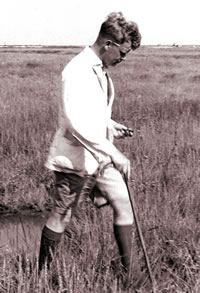 He established the Field Club by popular request and in 1950 took a group to the New Forest, where they camped on the edge of heathland and in sight of the Balmer Lawn Hotel at Brockenhurst. The trip down had been organized ahead in typical Raymond Crowther style, and to students the arrangements just seemed to happen with no regard for the much time and correspondence required by Mr Crowther to ensure that the trip was very successful.
The following year, 1951, the Field Club went to the Lake District and camped for 3 weeks near Watendlath Tarn, again by train and with much man-handling of equipment. In 1952 and 1953 Raymond found a different venue for the Field Club – Flatford Mill Field Centre. Different courses were attended in the two years. The first was on freshwater biology; the following next year was on estuarine biology. They were a valuable learning experience and we were able to make the most of the good weather in both summers. Best of all, they didn’t need to transport all that camping gear of previous years!
Significantly, almost all of the involved groups followed careers in one area or another of biology. Greater detail of these trips may be found in the School Trips section.
At the Winshill School, Mr Crowther always seemed to be a little detached from the rest of the staff, apparently preferring the solitude of the small side-room at the back of the biology laboratory to the staff room. His success as a teacher cannot, however, be denied and many of his pupils went on to start careers with degrees in such fields as microbiology, medicine and dentistry. He also very avidly corresponded with other biology teachers and had some influence on the content of ‘O’ Level biology papers.
He is probably best remembered by many he taught for ‘Percy’, his faithful baton. When the class was being rowdy, he used to stand an old table leg on the front bench, lay ‘Percy’ by its side and utter the Latin phrase “signum bellum sto” (Symbol of war stands) as a warning that the next offender would receive a lump on the cranium with a size proportional to level of misdemeanour; the worst offences being punished by a ‘Crunchie’. This was fairly effective but it is unlikely that the tradition would have survived today!
He was very interested in classical music and a fairly accomplished player on the piano, organ, violin and viola.
Unfortunately his wife Mary suffered from severe arthritis and Raymond relentlessly researched the latest cures and reliefs. In 1973, after a normal day at school, Mr Crowther died very suddenly and without any real prior warning, suffering a heart-attack while helping his wife from the bath. They did not have any children.


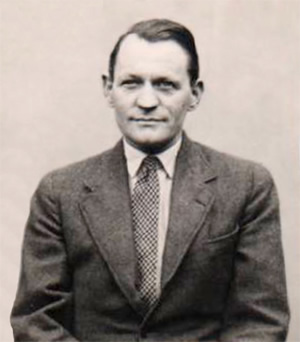 Ellick Thomas Ward was born in 1908 at Bingley, Yorkshire, the eldest of seven children and the only one of the siblings to enjoy a university education. He attended Bingley Grammar school, doing particularly well in French, History and Geography, although Physics, especially the construction of wireless sets, had been a main interest for him. In the Upper Sixth he was Senior Prefect and Rugby Captain and was quoted as “one of the most determined Rugby Forwards that the school has had”.
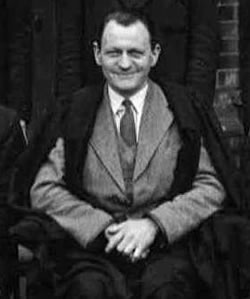 Ellick’s first teaching posts were at Bedford and then Doncaster, where he taught French, Geography, Mathematics, English and P.T. Always involved in extra activities, he was assistant scout master of one of the two scout troops at Doncaster, and Group scout master for Doncaster parish church. An unassuming, yet strong character, he is reported to have been much trusted and admired by the boys. At this stage he took the teacher’s certificate of the amateur Swimming Association and the Certificate for instructors in Air Raid Precautions.
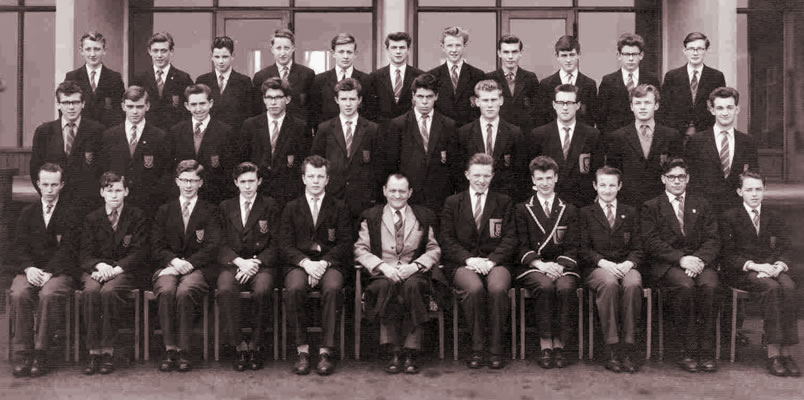 He was associated from its formation with the local branch of the Alliance francaise, and was concerned with French exchanges. For several years he, Norman Jones and others escorted parties of boys to Belgium where they stayed at the Hotel Venise du Nord in Bruges and enthusiastically explored the area.
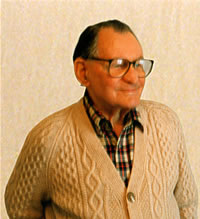 Ellick retired in 1973, glad that he was not involved in the change over to a comprehensive school (even the move from the town centre to Winshill he had scorned as a move to the ‘biscuit factory’).
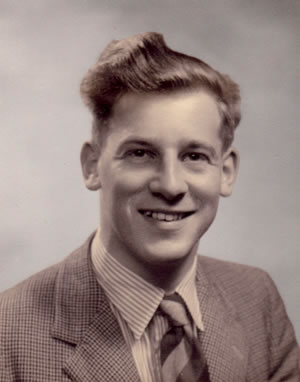 Geoffrey was born in Radcliffe-on-Trent, Nottinghamshire in 1928. He was educated at West Bridgford Grammar School from which he gained a place at Hull University College to take a London BA Honors in Geography from 1947 to 1950.
 In 1953, Geoff and his now wife decided that they would like to move back to the Midlands somewhere near Burton or Nottingham.
 Having been pleased with Geoff’s performance, he was a natural successor so at the start of the following term, Mr Pitchford returned, Mr Cooper resumed to teach maths and Geoff Henton was permanently appointed as geography teacher. All could not have worked out better!
 In 1968, George Cooper retired as Deputy Headmaster. At this time, Geoffrey was still second geography teacher under Ron Illingworth as Head of Geography. Harry Smith had not too long earlier returned to the Grammar School to take over the maths department. Although thought of as being the most likely candidate, Harry had made it plain that he had no interest in such a position wanting instead, to concentrate on mathematics and the open scholarships which were his passion. Speculation was that Mr Hugh Wood, Head of the languages department, would be likely to succeed above other heads of department. Nonetheless, Geoffrey decided to formally apply and was interviewed.
 In 1973, William Gillion was to retire as Headmaster in the middle of the year due to external pressures and Geoffrey was appointed acting Headmaster for the remainder of the year until Brian Harris was instated, having been moved from Horninglow Secondary Modern School to oversee the ‘smooth’ transition from Grammar School to Comprehensive. At this point, Geoff reverted to Deputy Headmaster for what was probably going to be the most disruptive period in the school’s history. Geoffrey earned much respect in this period for his strong focus on making sure that the now mixed school students got the best possible education out of the situation as it now was without getting drawn into the politics of either side.
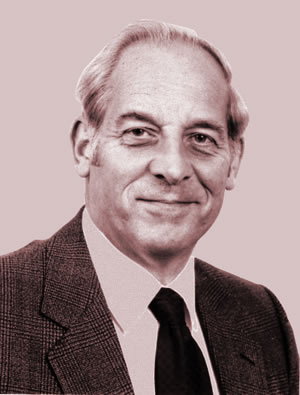 He continued as an effective Deputy Head and geography teacher until he was forced to take early retirement in 1984 due to poor health.