
Back Row: Alan Botham, Paul Brewer, Ian Bentley, John Cartwright
Front Row: Tim Stubbs, Roger Yates, Graham Coleman

Back Row: Alan Botham, Paul Brewer, Ian Bentley, John Cartwright
Front Row: Tim Stubbs, Roger Yates, Graham Coleman
An account of the school during World War I Years would be very welcome.
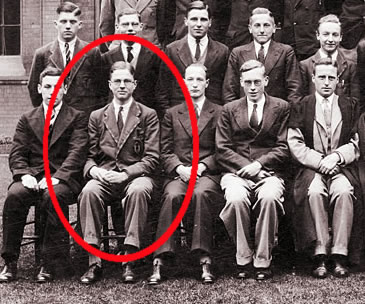 Until the late nineteen twenties, it was Natural History taught by the greying and kindly Mr Storer who lived handily in a large house at the Bond Street end of High Street. Appropriate to his subject but not to the man was the nickname ‘Pongo’. Lessons seemed to be in the late afternoon in the draughty classroom/laboratory on the first floor beyond the Masters’ common-room. The wind rattled the dark blinds and, by the blackboard, hung a roll-down picture of the ‘Corvidae’; the group of birds that contains the crows, ravens, rooks, jackdaws, jays, magpies, treepies, choughs and nutcrackers. On this a large rook presided over the lesson as did the portrait of John Jervis, Admiral Lord St. Vincent at the head of the stairs outside. The textbook was an impenetrable work by Stenhouse and, like the Corvidae, it was seldom referred to in the lessons. We were encouraged to report the various wonders we had seen, or imagined we had seen, like white blackbirds and unusual nesting sites – a selection would later be published in ‘The Cygnet’.
Mr Storer had also assembled much of the collection that used to reside in the cabinets leading to the Biology lab at Bond Street.
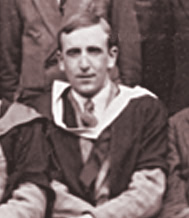 Then suddenly Mr Storer disappeared, the subject became Biology and the teacher a young Cambridge graduate, R G Neill (pictured), fresh from research work at the Plymouth Marine Biology Station (and, I believe, free also from the ‘benefits’ of teacher training). Soon the Corvidae and the white blackbirds were replaced by the different sources of evidence for Evolution and the latest chemistry of Photosynthesis. The genetics of Drosophila were just being explained in terms of genes and chromosomes. Sturtevant, one of the American researchers came to England on a lecturing visit and somehow we got specimens of the fruit-flies and tried to repeat some of his work, feeding the tiny insects on a banana mixture in jam jars.
Neill (‘Reggie’) had an awkward manner but his penetrating intelligence and devotion to his task made many who might come to scoff remain to learn. His lessons were soon assembled and published in his admirable ‘Aids to Biology’, a miraculous alternative to ‘Stenhouse’. His writing style was precise; he was an admirer of H L Menchen and a favourite quotation was that some claim was ‘neat, plausible and wrong’.
The ‘Biology Sixth’ particularly appreciated the clear scientific approach and his enterprising new schemes. There were weekly excursions on bicycles to Hoar Cross to take measured samples of pond life; the counts of animals were correlated with records of pH and temperature. To keep the catch we constructed a series of aquaria with an aeration tower some ten feet high for the water circulation. Another ambitious construction provided the stage which could be erected in the Hall for dramatic performances (I recall that the generous lighting we organised demanded 30 amp wiring). Mr Davies and Mr Neill collaborated in writing and producing the shows.
Some remember that ‘Reggie’ Neal’s desk in the Biology lab stood on a platform. whcih no one was allowed to step on. If they did they were told in no uncertain terms “get off my quarter deck boy.”
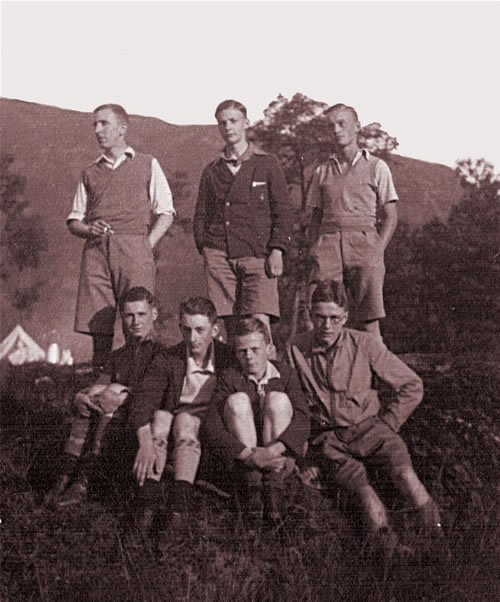 Mr Neill was also responsible for taking groups of Grammar School pupils on field trips. One such excursion was a summer cycle-camping holiday to the Lake District. This photo shows him standing with C.H. May and Frank Shotton with (left to right) James Woolley, WMN, CM and John P. Bull seated.
Another outstanding trip was to the Port Erin Marine Biology station in the Isle of Man. What could be a more enjoyable way to study than to row round a sunny bay and pick up samples of Sea Urchins from the clear pebbly sea floor!
Another of Neill’s literary favourites was ‘The Hunting of the Snark’ and we vied with one another to find appropriate quotations for the various adventures on our journeys – there was never any doubt as to who the ‘Bellman’ was.
Reggie Neill left the school during the war years, being replaced as Biology master during his absence by teacher from Newhall called Connie Illsley. Mr Neill returned to the school after the war.
It seemed incongruous that RGN was knowledgeable about spiritualism; we never knew whether his claim to have an aunt who levitated was just a spoof, but he turned such matters to good advantage in his historical novel ‘The Witches of Pendleton’. After marrying late in life, he retired to his beloved Lake District where he continued with success his third career as a novelist.
His first novel under the name of Robert Neill was ‘Mist over Pendle’, published in 1951. The success of this led to other novels, including ‘Moon over Scorpio’. By the time of his last book, ‘The Devil’s Door’, being published in 1979, he had sixteen books published.
Robert Neill made good contribution to the life of Burton Grammar School and to the achievements of many of its pupils. Several, such as Dr J.P. Bull C.B.E, C.H. ‘Bert’ May, whose prize giving book can be found elsewhere on the website, and Archie Grain who tragically did not survive the War; also John Woolley, Research Chemist with ICI and expert on photography and caves. His brother Jim and Noel Perks who both became teachers and Frank Shotton an Agricultural Scientist all feel endebted to Mr Neill for his influence and teaching.

Back Row: Michael L Smith, Philip Shelton, Robert Longman, John Tucker, Donald Bauer, Paul Stockbridge, John Freeman, David Noble
Middle Row: Steven Wilcox, Chris Dytham, William Bradford, Peter Clemson, Iain Gray, Steve Hackett, Anthony Hardy, Michael J Smith, Stewart Cumpstone
Front row: Bernard Buckley, Kelvyn Bailey, Clive Smith, Nicholas Foston, Graham Loasby, G.E. ‘Fanny’ Radford (Form master), Ken Jordan, Bob Brooks, Glen Cooper, Kevin Fisher, Keith Foster

Back Row: Graham Howlett, Adrian van Daesdonck, Alastair Sutherland, John Chamberlain, Peter Shotton, Mick Street, Nick Pallett, Steven Elson, Peter Fisher, Philip Bell, Brian Moran, Brian Bond
Middle Row: Andrew Brown, Stephen Hadley, Howard Moore, George Sheldon, Barry Leedham, Stuart Arnold, David Jackson, John Bisbrowne, Robert Street, Dave Kennedy, Richard Hodgkins, Dave Field
Front row: Leo Howe, Robert Gould, Thompson, Andrew Vanables, David Bell, John ‘Jim’ Redmond (Form master), Philip Noble, Roy Bradley, Roddy Haigh, David Williams, Geoff Holden

Back Row: Robert Bull, David Clark, John Shilton, Ian Sutherland, Alan Newton, Mark Franklin, Andrew Woodland, Kevin Crisp, Christopher Dawes, Ian Haynes, Andrew Cheadle, Steven Lakin
Middle Row: Frank Burrows-Flowers, Graham Starmer, Chris Jerram, Ian Derrett, Stephen Taylor, ‘Doris’ Irving, John Wiggins, Brian Davis, Quentin Cubberley, David Glossop
Front row: Wall, Richard Hayes, Sam Williams, Ian Dilks, Andrew Livermore, Ron Illingworth (Form master), Peter Sherratt, Graham Parkinson, Charlie Holden, Bob Barnes, Rory Butler
My time at the school was spent from 1968 to 1973. Looking at this picture of most of the teaching staff taken in 1970 still conjures up some vivid memories some forty years later.
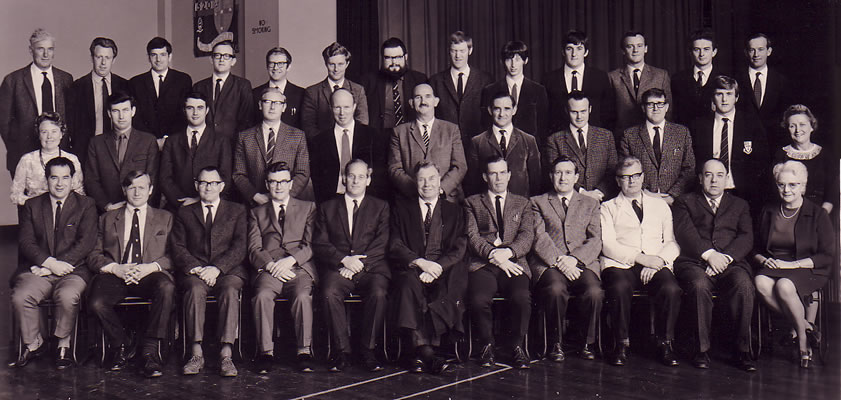
Back Row:
01. John Andrew (Tinman) – [Metalwork], 02. Colin Bagshaw (Bogwash) – [Physics], 03. John Long – [Latin], 04. David Wyatt – [Spanish], 05. John Sneyd – [Physics], 06. Alan Brewerton (Doc) – [Chemistry], 07. Robin Langton (Bumble) – [English/Literature], 08. Graham North – [History], 09. John Armstrong (Louis) – [Maths], 10. Alan Cure – [Geography], 11. John French (Frenchy) – [PE], 12. Chris Aylott – [Maths], 13. Michael Green (Ma) – [English/Economics]
Middle Row:
01. Barningham – [Office], 02. M02, 03. M03, 04. Chris Shepard (Shep) – [English], 05. Peter Dawe (Jackdaw) – [Music], 06. Harry Smith (Brab) – [Maths], 07. G.Davis (Taffy) – [Woodwork/Eng.Drawing], 08. Alan White (Chalky) – [English], 09. Brian Luckett (Chinner) – [Chemistry], 10. Robert James (Jessie) – [French/Latin], 11. Coates – [Office]
Front Row:
01. Walter Chadbourne (Walt) – [Physics], 02. Victor Roebuck (Vic) – [PE/English], 03. Ellick Ward (Ernie) – [French], 04. Hugh Wood (Woody) – [French], 05. Geoffrey Henton (Gaff) – [Geography], 06. Bill Gillion (Beak) – [Maths] *Headmaster, 07. Ron Illingworth (Ronnie) – [Geography], 08. Norman Jones – [Chemistry], 09. Ray Crowther (Joey) – [Biology], 10. Percy Barratt (Butch) – [History], 11. Elizabeth Radford (Fanny) – [Divinity/French]
Teacher |
Name |
Nickname |
Subject |
| Andrew | John | Tinman | Metalwork |
| Armstrong | John | Louis | Maths |
| Aylott | Chris | Maths | |
| Bagshaw | Colin | Bogwash | Physics |
| Barratt | Percy | Butch | History |
| Brewerton | Alan | Doc | Chemistry |
| Chadbourne | Walter | Walt | Physics |
| Crowther | Raymond | Joey | Biology |
| Cure | Alan | Geography | |
| Dawe | Peter | Jackdaw | Music |
| Davies | David | Taffy | Woodwork |
| Gillion | William | Beak | Headmaster |
| Green | Michael | Ma | English |
| Heath | Lewis | Chippy | Art |
| Henton | Geoff | Gaff | Geography |
| Illingworth | Ronald | Ronnie | Geography |
| James | Robert | Jesse | |
| Jones | Norman | Chemistry | |
| Langton | Robin | Bumble | English |
| Long | John | Charlie | Latin |
| Luckett | Brian | Chinner | Chemistry |
| Mart | David | Maths | |
| Meadowcroft | X | Modern Maths (assistant) | |
| Moore | James | Jomo | Maths |
| Morgan | Dil | Wingco | Geography |
| North | X | History | |
| Playll | Jack | Pleb | History |
| Radford | Elizabeth | Fanny | RE / French |
| Roebuck | Victor | Vic | PE |
| Shepard | Christopher | Shep | English |
| Smith | Harry | Brab | Maths |
| Sneyd | John | Sam | Physics |
| Ward | Ellick | Ernie | French |
| White | Alan | Chalky | English |
| Wood | Hugh | Woody | French |
| Wyatt | David | Spanish |
* grey simply donates that they did not teach me in the ‘B’ Class.

The school was split into four houses; Wellington (Maroon), Clive (Green), Drake (Blue) and Nelson (Black). So we each had to have a house sports shirt in the appropriate colour.
The wooden shields themselves took pride of place in the main hall with two either side of the main school shield.

Looking at the House Shields rekindles the thoughts of how Clive looks somehow out of place and would be more fittingly depicted as a white shield with a green cross. I have not been able to find any genuine heraldic reasons to relate the four crests to their associated historic figures, neither have I been able to identify any other example where the same combination of shields is used so their origin remains a slight mystery; hopefully, I will be enlightened one day.

Seen here are two of the original wooden wall crests from the area in front of the library. While every effort has been made to restore the images, no attempt has been made to ‘graphically restore’ the conditions of the actual crests, which I remember being in much brighter condition.
In 1960, Headmaster Bill Gillion, with the co-opted help of Harry Smith, inaugurated a new form 5X. This was a special class was for the most gifted pupils of form 3A. It meant that the small group would study the fifth form syllabus, with the best available tutoring, in their fourth year to gain a year so that they would be able to study Open Scholarship, which went well beyond normal ‘A’ Level, in their year in the Upper Sixth rather than having to spend an addition year there.
The class was comprised of just twelve boys. Nine of the twelve gained places to Oxford or Cambridge Universities. To put this in context, Repton School achieved eight in the same year!
Sadly there was strong pressure, both internal and external, to look after the lesser able pupils rather than the brightest so the exercise was never repeated. Harry and other of the school’s most senior teachers saw this as the “start of the rot”.
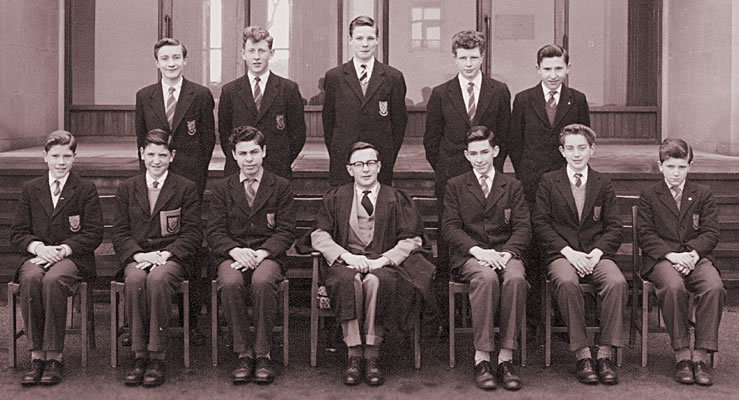
Christopher Tipper is the one pupil missing from the photo. It is thought that he went to Leeds University to he read Mathematics.
Top row from left to right:
Michael Green, studied Metallurgy at Oxford (New College) and now lives in the northern part of England. He visited classmate John Watson some time ago in Copenhagen in connection with some consultative work for IBM. He is still in contact with Roger Heape.
John Watson, studied Chemistry at Oxford (St. Edmund Hall), but converted to the computer industry and moved to Denmark for personal reasons in 1969. He has since worked for IBM for whom he has now worked for close to 40 years and still lives in Copenhagen with his wife Ida.
Roger Heape is considered a very central character. He was a fantastic DJ at John Watson’s 50th birthday in Copenhagen back in 1995 – his guests still talk about it, so many years after! Roger studied Geography at Cambridge (Pembroke College) and has had a lot to do with the Airlines business – BEA in the beginning and British Airways later on in a very top position. Roger has now retired and lives in Winchester together with his wife, Jenny.
Michael Hayton (aka Tudge) went to Cambridge (Churchill College) to study languages and went on to qualify as a Chartered Accountant.
David Allen was the only pupil in the class who did not go on to university.
Bottom Row from left to right:
Richard Inwood became Bishop of Bedford in 2003, however, he started his university career at Oxford (University College) studying Chemistry. (There are lots of web items to be found about Richard and some of them describe his career after Oxford).
Alan Stewart went to Oxford (St. Catherine’s College) and studied Metallurgy on an Exhibition Scholarship. He went on to do a PhD at Oxford before joining the CEGB (Central Electricity Generating Board as it was then).
Chris Howe went to Oxford (St. Edmund Hall) and also studied Metallurgy on an Exhibition Scholarship. He then went into the IT industry where he spent 20 years with ICL before retiring.
Arthur Presswell was the 5x form master and taught History. He did not spend long at the Grammar School and is thought to have come from Southend-on-Sea.
Alan Cooper went to Sheffield University and studied Geology. He also enjoyed an excellent Rugby Union career which included a number of England caps. He went to New Zealand to continue his studies. There, he went to Otago University. Despite not going to Oxbridge, he went on to become a professor (see http://www.otago.ac.nz/geology/afc.htm).
David Gooderick went to Cambridge (Emmanuel College) following which he did a teaching diploma at Oxford (Exter College) and went into teaching.
Chris Jeggo went to Oxford (St. Catherine’s College) on a Full Open Scholarship to study Physics. (articles on the web about him and contributed articles and photos to BGS). Chris moved into defence R&D in 1974 and has remained there ever since, working for a couple of different employers.
Teachers involved with 5x were:
English: Norman ‘Coddy’ Roe
French: Hugh Wood
Latin: Joseph ‘Jake’ Hammond
Spanish: (for the linguists): K.T. ‘Katie’ Harris
Maths: Harry ‘Brab’ Smith
Physics: Ezra Somekh
Chemistry: (for the scientists): Norman Jones
Geography: Ron ‘Ronnie’ Illingworth, and Geoffrey ‘Gaff’ Henton
History: Arthur ‘Elvis’ Presswell who also served as form master.
All pupils in 5x took at least eight ‘O’ levels.
Over 50 years later, a reunion lunch took place in Oxford with nine of the original members in attendance.
Burton Grammar School Master (Chemistry 1945 – 1979)
Norman was born in Swinton, an area of Greater Manchester which was best known for its cotton mills and Rugby League team. His early school days were spent at a local Junior school where his father was Headmaster.
At age eleven, he won a scholarship to enter Eccles grammar School where his various successes, which included colours for athletics, culminated in him gaining entry to Manchester University to read Chemistry.
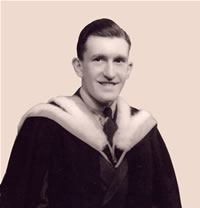 When he graduated three years later, the second world war was quite well advanced and Norman’s knowledge was put to use overseeing the production at the Government Explosives Establishment in Drigg, south of Whitehaven.
After the war, Norman sought a post in teaching, and was successful in obtaining a post at Burton Grammar School, being appointed by the then Headmaster, Mr H.S. Moodey who was a Cambridge Chemistry Graduate and thus well able to assess Norman’s potential value to the school.
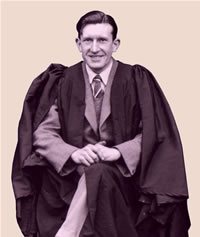 For the first years at Burton Grammar School, Norman lodged with the Binns family in Winshill. When his father began to suffer with his health, his parents moved from Manchester to Winshill and Norman moved in with them. Norman was though, soon to marry and move to Ashby Road where he was to remain for the rest of his life in a home still occupied by his wife, Sheila.
Initially, Norman worked under the departmental Head at the time, Mr E.C. Nicholson. This partnership enabled the department to flourish and many of their pupils performing with distinction in Open Examinations. In 1952 Mr Nicholson retired and Norman was promoted to take over the Chemistry Department. He was to hold this post for a further twenty-seven years until his eventual retirement.
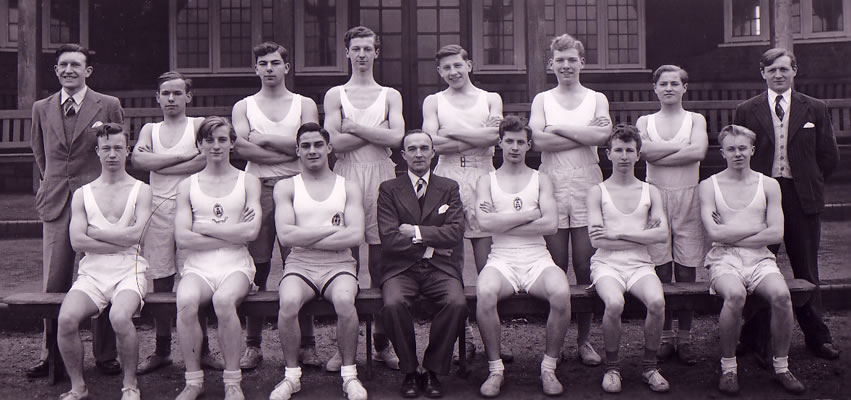 Norman was also heavily involved with school athletics in his early days, having earlier in his life been a promising sprinter. He working together with Victor Roebuck, the appointed PE (Physical Education) teacher, not knowing at this time that the two of them were destined to remain on the Grammar School teaching staff together for many decades to come.
At school, Norman was a keen but fair disciplinarian. He would not tolerate indiscipline in the vicinity of so many potentially dangerous substances. He was known to speak his mind but also, to be warm-hearted and was full of goodness; being generously helpful to anyone he felt he could assist. Under his leadership, the Chemistry Department continued to achieve high standards, and many of Norman’s pupils gained entrance Scholarships or Exhibitions to the top Universities.
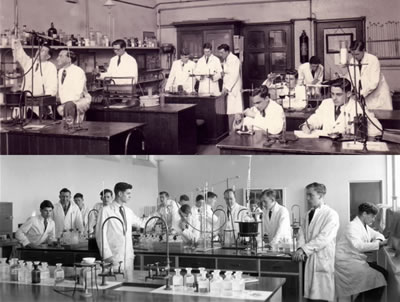 Norman taught at both Bond Street and Winshill and had considerable input into the design of the new laboratories. The original benches at Winshill proved to be too large and had to be hurriedly modified before school was back in session.
Hugh Wood, the French teacher whose time also spanned Bond Street and Winshill, became one of his closest friends and colleagues. Together, they ran the school Scout Troop. Hugh also wrote the scripts for gang shows that were held for several years in Bond Street Old Hall in which Norman was to appear. Ballroom dancing was another of Norman’s interests and he and a mistress at the Girls High School ran dance classes, held in the Girls High School. He was also involved with the annual Christmas dances held there which provided many happy memories.
In the nineteen-sixties, Norman and Hugh developed an association with the London University School of Economics and became two of the representative educationalists to travel overseas to study educational systems in other parts of the World. This included multiple trips to different parts of America and Russia. A later trip to China was abandoned. On one of the trips to America, Hugh Wood had a fall and broke his femur necessitating a special seat on the plane home.
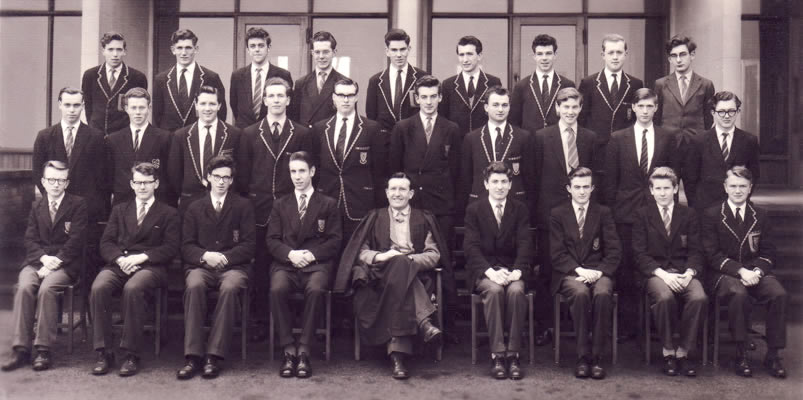 With many photographic slides of his travels, Norman presented a number of illustrative presentations to the Grammar School Sixth Form Society, as well as many outside groups and societies which were very much appreciated by those fortunate enough to attend. The experience had given Norman the yearning to travel and subsequently he became a very keen caravanner, travelling very extensively on the continent with his wife and young son during the long school holidays.
Norman found it very difficult to adjust after the changeover from the Grammar School to the comprehensive system. He was very bemused at how much time he had to spend traversing between the three amalgamated sites and perhaps the final straw came when he was asked to go down the hill to Ada Chadwick and take Needlework for the afternoon.
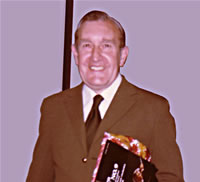 Norman requested early retirement and consequently retired in 1979. Post-retirement, Norman and Sheila led an active and enjoyable life together and made the most of their join love to travel. In what was to be his final year alone, he and his wife travelled to Spain, Africa, and South America. With only minor ailments, his death on June 10th, 2005 came as something of a sad surprise.
Norman is survived by his wife Sheila and his son Graham, who was himself a pupil of Burton Grammar School, and now works as a Consultant Anaesthetist at Preston Royal Hospital.