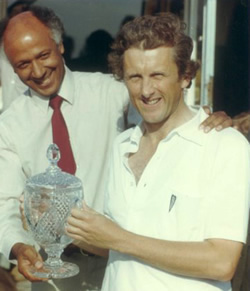
 Robert James was educated at Newcastle (Staffordshire) High School. From here he went to the University of Durham (Grey College) where he gained a degree in French Language and Literature and Post-graduate Certificate of Education. He played cricket for the university for four years and became captain in 1970.
He spent one year in France at the Lycee Marceau, Chartres, as English assistant. This coincided with the student riots of May-June 1968. There was a general strike for a short time and Sixth Formers occupied the school, so effectively he had a month off work.
Bob also played cricket for Staffordshire and Derbyshire 2nd XI, played in North Staffs and South Cheshire League as both an amateur (Longton CC) and professional and was professional at the same club (Norton) where Sir Frank Worrell, Sir Garfield Sobers and Jim Laker had been professional. He also played hockey for Burton in the 70s.
His first experience of Burton Grammar School was as an opponent in a cricket match played at the Mill Hill Lane site when he was a pupil at Newcastle (Staffordshire) High School. He remembers being impressed by the view from the pitch over the Trent valley, but Burton itself seeming singularly unattractive, even to someone brought up amongst the smoke and grime of North Staffordshire.
It was therefore somewhat ironic that he was destined to spend five years as a master at the school and a further thirty-one on the same site at the Abbot Beyne School. By the time he retired, having been acting Head for a short while the previous year, he was beginning to feel like Mr Chips.
It was on a damp miserable Friday in March 1970, having made what seemed an interminable journey from Durham, that Bob had found himself being interviewed for the post of assistant French master at the school. A misty shroud enveloped the town, and the unique Burton aroma of malt, rubber and Robirch permeated everything. It did not make for a very welcoming atmosphere.
Having found his way from the station to the ‘Swan’ as a reference, he finally located the school. In fact, he arrived early for the interview, and was asked to wait in the corridor outside the office. Deputy Headmaster, Geoff Henton appeared but what he expected to be a preliminary interview turned into a pleasant chat about sport, especially rugby, as the school was agog at the prospect of the match the following day at Peel Croft – the Rugby County Championship final. It is a competition which no longer exists in these days of professional rugby, but it was in those days a major event in the sport’s calendar. Against all the odds Staffordshire, coached by one Vic Roebuck, had reached the final, a final which they were to win.
He was then shown around the French department and interviewed by Bill Gillion. To his surprise, he was offered the job. To Mr Gillion’s surprise, Bob asked for time to think about it. It was clear that here was a good department in a good school, but the thought of living in Burton on Trent was not appealing. The smell of Marmite was still in his nostrils.
Given the good prospects for a young French master, taking into account the age profile of the department, Bob’s motives for accepting the post were rather less career-orientated. He was captain of the cricket team at Durham University and a full fixture list beckoned for the summer. He didn’t want to waste time travelling around the country for interviews when he could be playing cricket!
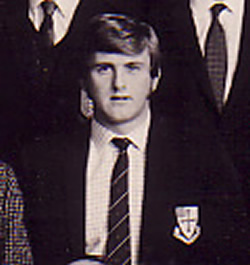 Having accepted the post, he started in September in this prestigious school which had just celebrated its 450th anniversary. The French department was well-managed by Hugh Wood, who managed to combine old-fashioned academic rigour with new-fangled methods such as a language laboratory and an audio-visual course in the first year. He was superbly organised and the syllabus set out exactly what was to be done. Hugh was always supportive and helpful. The other members of the department were Ellick Ward and Betty Radford, who like Hugh were approaching the end of their careers. Ellick was always jovial, often making a gift of his bottles of home-made wine to his colleagues.
Mr James also had to teach some Latin, a prospect which he did not relish, as he had studied the subject at university only as a subsidiary, and had not touched a Latin book for three years. Fortunately, John Long had only allocated him a small set of Lower Sixth pupils who had failed ‘O’ level because they had missed out the third year in order to take GCE early. They were therefore extremely bright and motivated because they needed the qualification for Oxbridge matriculation. The lessons took quite a while to prepare; he remembers spending ages sorting out the first lesson – a double – and running out of material half-way through. The lads however, sailed through the November re-sits and later went on to Oxbridge.
His first French lesson was a total disaster. It was with a first year group in the French room using the audio-visual course. After a couple of minutes the drive-band on the tape-recorder, a reel-to-reel machine which was at the cutting edge of technology at the time, broke. As one spool spun totally out of control, the desk was soon covered with yards of tape. He carried on as best he could without the machine until the bulb in the projector blew. Fortunately the lessons were only forty minutes long in those days and he somehow survived but hasn’t trusted technology since.
Living in Burton was something of the culture shock that he had feared. He rented a small bed-sit in an old house on Ashby Road owned by the Renwick family which is now an old people’s home. After four years in Durham and one in Chartres, woken each day by the sound of bells and looking out on to two of the most magnificent cathedrals in Europe, it was loud drone of beer lorries struggling up Ashby Road and the view of the water tower which now greeted him each morning.
Still, Burton had its compensations in the form of the excellent school. He was able to settle into the swing of things and was soon enjoying the work.
The staff was the usual mix of the experienced ‘doyens’ and the younger masters who definitely knew their place in the hierarchy. Amongst the former were, as well as Hugh Wood, Norman Jones, Harry Smith and Ron Illingworth. The latter was a luminary. During Robert’s first week in the school, a fearful first-former, waiting outside the Geography room, asked “Sir, is it true that Mr Illingworth throws boys out of the window?” Brave was the boy who would dare to put a foot wrong in one of Ronnie’s lessons. A shared interest in cricket meant that Bob and Ron got on well.
Harry Smith, of course, was already a legend. His teaching was inspirational and a steady stream of Sixth-formers made their way to the best universities in the country to read Maths. He also made his colleagues laugh with his deep fund of anecdotes.
All these men had great presence and were awe-inspiring to newcomers, but once Bob got to know them, they were the epitome of kindness and good humour. What struck him was the fact that many of the staff had great talents outside of their subject specialisms, whether it was in the arts or sport. Experts in their subjects they certainly were, but they were also well-rounded and cultured men.
Many of the younger staff were also gifted sportsmen and would willingly take on a team, which, in the case of rugby, meant three practices a week and a match every Saturday from the end of September to the beginning of March. The present generation of teachers, sadly, are too busy with one initiative after another to take on such tasks, and in any case, school sport nationally suffered enormously in the 80s, never to recover, despite the government’s finally waking up to the fact that competitive sport is not necessarily the evil which many progressives think it is.
Quite apart from the dedicated PE staff (the inimitable Vic Roebuck and John French) Alan Cure, a former pupil and Cambridge graduate, was a Staffordshire prop and trained the Under 15s. John Long, who could turn his hand with equal facility to rugby, tennis or cricket, took the under 14s in the winter and a tennis or cricket team in the summer. Colin Bagshaw could be seen every Saturday morning in the rugby season refereeing a match before turning his attention to cricket in the summer.
It was no surprise then that the school produced a steady supply of rugby players for the county and even the England teams. The Osman brothers, Peter Nelson and Pete Orton represented their country in the early 70s. Mr James remembers being asked by Geoff Henton if he would help him to transport some of the Under 15 team to a county match one Saturday. Half the Staffordshire side seemed to be from school. Two names that emerge from the mists of time as well as Orton were Tony Hair and John Sharpe.
Bob’s own small contribution to sport was to help John French with senior cricket coaching and take the Under 12s rugby squad. The latter was an innovation, and normally the Loughborough student would lend a hand. The first was John Appleby who became assistant head at Paulet. They were amazed at one early training session when a young lad started popping over kicks from both sides of the pitch with either foot. His name was Russell Osman, later like his elder brother Mark, to represent England Schools at rugby. He then found fame as an England and Ipswich Town centre-half. Other members of that side included Jes Redfern and Paul Green, who both made their mark on local cricket.
As far as cricket was concerned, lads such as Bob Lathbury, Graham Parkinson, Graham Milnes and David Marshall were all accomplished players, with the latter two enjoying considerable success after they left school with Bass and Burton CC respectively.
Bob was form master of one group of pupils for several years. He taught them French from 2B to ‘O’ level as well. He found them a pleasant group who worked hard (under suitably applied pressure!) and with whom you could share a joke at the same time. Names that spring to mind are Mark Turner, Paul Johnston, Dave Granville, Steve White, the Markeys, Chris Talbot and “Sam” Salt to name but a few. It was a class of over 30, much to be frowned on these days. The marking was time-consuming but the results were excellent. He had to admit to feeling very old when Chris Talbot’s son (along with Tony Di Gravio’s lad) turned up in his Citizenship group in his last year of teaching.
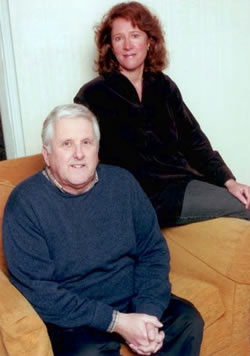 The final year of the Grammar School intake produced some outstanding pupils both academically and on the sports field. Graham Shaw went on to read Vetinary Science at Cambridge and played hockey in an outstanding Abbot Beyne XI which included Mick Emery, Ian Jones and Steve Morrison. (John Mills, a future Scottish international, was also in that side, but he had arrived at the school after re-organisation.)
BGS ran smoothly. Bill Gillion was a typical grammar school headmaster of the time, paternalistic in his approach. Staff meetings were few and far between; the masters simply got on with the job. Bill’s deputy, Geoff Henton, was always calm and extremely helpful to young staff. Little did Bob realise that he would one day succeed him as Deputy Head. That was in 1984 after serving as Head of Department for the previous ten years.
Bob finally retired in the summer of 2006. David Mart had retired the previous year leaving Bob as the last staff link between Abbot Beyne School and Burton Grammar School.
Despite his original impression of Burton, Bob still lives locally. He is married to Yvonne with two sons. The elder son Mark did a degree at York before doing a Master’s at Loughborough before training as an accountant. Younger son Michael read Law at Cambridge. He is spending his retirement watching sport and doing some occasional sports writing (football and cricket) for both the press and websites, and coaching cricket at Rolleston CC and for Derbyshire U17s and other age-groups.


 Ronald Illingworth was born in 1908 in the village of Carlton near Leeds; one of four children to a miner in Yorkshire’s industrial West Riding. He was successful in gaining a coveted scholarship to the Queen Elizabeth Grammar School, Wakefield. Here, he enjoyed great success both academically and on the sports field. He played both cricket and rugby for the school first teams as well as for Yorkshire schoolboys.
 In 1931, whilst playing for Taunton at Sidmouth, a hard-hitter, he hit a ball completely out the grounds. Having tea on a verandah on and seeing the ball heading towards him, a man had the presence to stand up and catch the ball to prevent it from crashing onto the table. After the game, so impressed, Sidmouth Cricket Club mounted the ball and presented it to the unwitting fielder. Ron was delighted to find that this is legendarily recorded in the clubs history.
 Mr Illingworth quickly gained a reputation for being a stern but fair disciplinarian and naturally became master in charge of cricket.
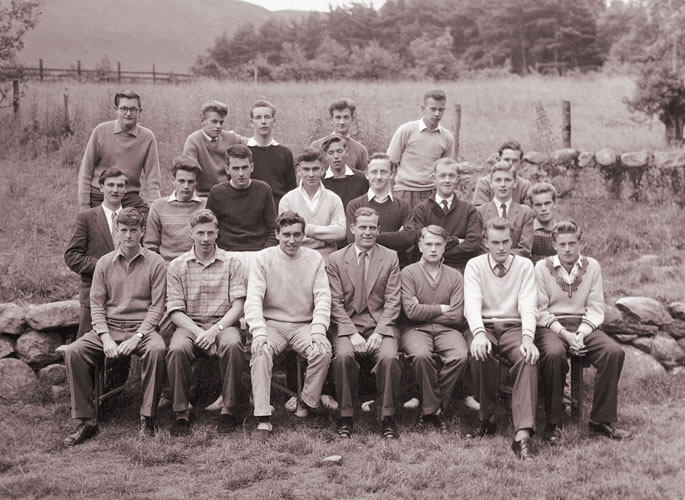 Ron was also an accomplished pianist and played at musical events and school assemblies for many years. His additional geographical activities also included field study groups to places such as the Lake District which he particularly enjoyed. Many of his pupils went on to enjoy distinction in both cricket and Geography,
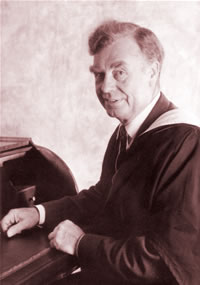 William H Gillion, more affectionately known as ‘Bill’, was educated at Paston Grammar School in Norfolk from where he was successful in gaining a place at Trinity College, Cambridge to read Mathematics. In 1934, he was awarded an Honours degree and he went on to gain an M.A.
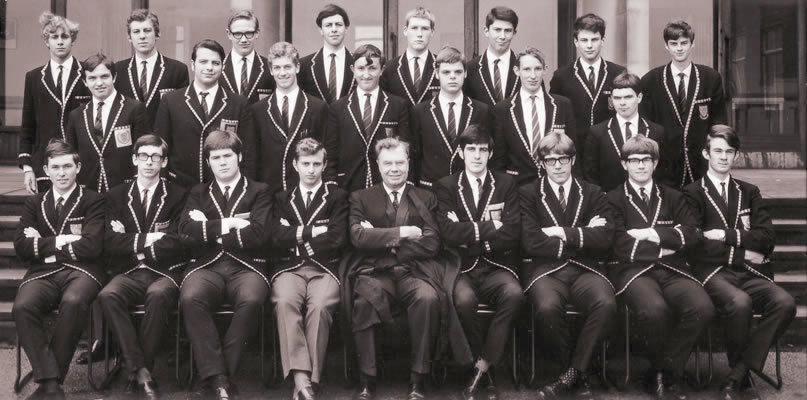 Mr Gillion was tremendously keen as far as academic standards were concerned, and the achievements of the school were never higher than under his headship. In 1960 William, with the co-opted help of Harry Smith, inaugurated a new form 5X. This was a special class that was for the most gifted pupils of form 3A. It meant that group of them would study the fifth form syllabus, with the best available tutoring, in their fourth year to gain a year so that they would be able to study Open Scholarship, which went well beyond normal ‘A’ Level, in their year in the Upper Sixth rather than having to spend an addition year there. Bill’s dream of academic excellence was realised; in a single year, Burton Grammar School achieved fourteen Scholarships and Exhibitions. To put this in context, Repton School achieved eight in the same year!
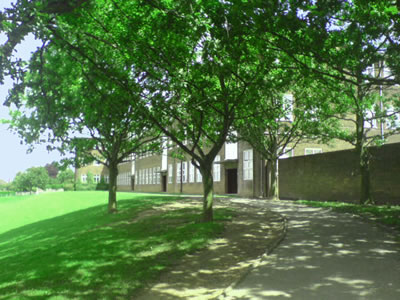
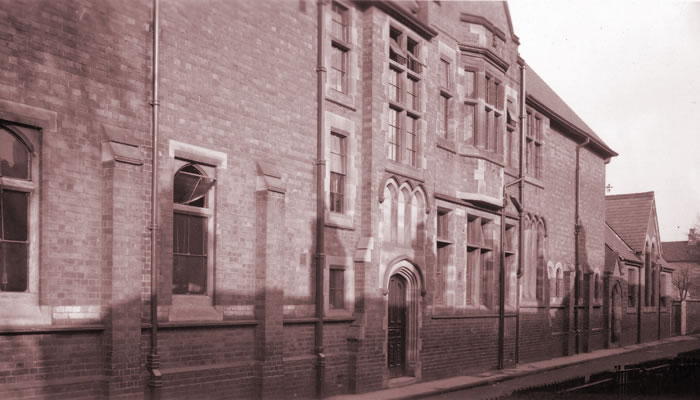
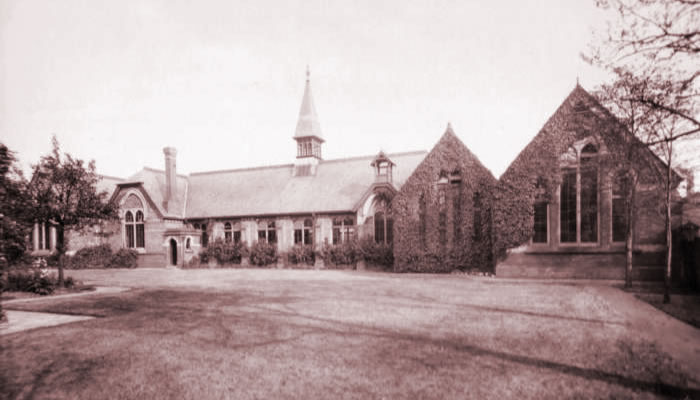
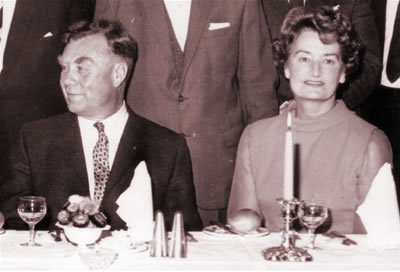 In 1975, two years after he left, the school closed, and was turned into the Abbot Beyne Comprehensive School’s Evershed building. You could almost say therefore, that his career at Burton Grammar School spanned the time of the beginning and the end of the Winshill school.
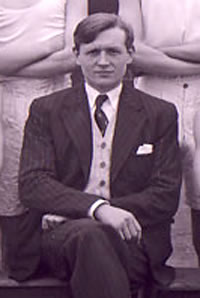 Victor was born in Rotherham, Yorkshire in 1925. He started his secondary education at Maltby Grammar School, one of whose most famous sporting pupils was Freddy Truman.
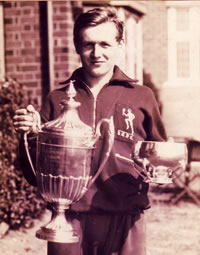 In 1942, he attended Loughborough College of Athletics that has produced many of England’s finest athletes the likes of Sebastian Coe, David Moorcroft and Sir Clive Woodward. In his first year, he won the coveted ‘Victor Ludorum Trophy’ (to save you rushing to Google to find out who Victor Ludorum was, as I did, it is in fact, Latin for “winner of the games”). It was the first time that this had been awarded to a middle-distance winner and Vic went on to win it the following; the first time that this had been achieved too. He also won the ‘Freshers Trophy’ for Athletics and Swimming combined. During this time, aside from athletics, he played for the college rugby team and was cross-country captain.
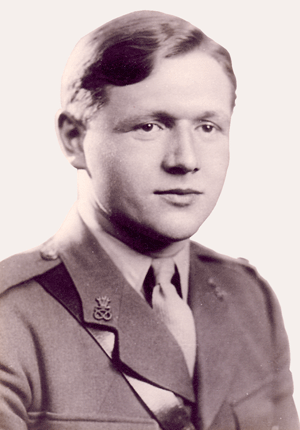 In 1944, his time at Loughborough was cut short with a one year deferment due to the war and was to join the Queens Regiment of the army in Maidstone, Kent. He was soon commissioned to the North Staffordshire Regiment and posted to Northern Italy where he was to patrol the Yugoslav border against gangs of Yugoslav partisans and escaped German prisoners of war. On conclusion of the war and before being demobbed in 1948, Vic played for the Central Mediterranean rugby and athletics team.
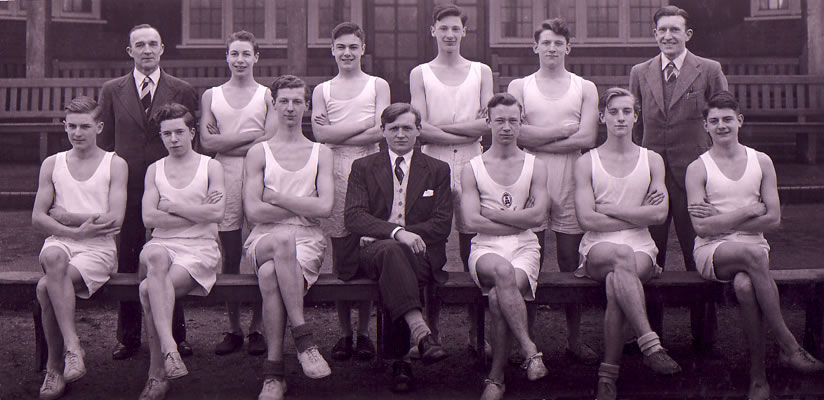 In January 1952, Victor joined Burton Grammar School, Bond Street as Head of Physical Education. Prior to this, the music teacher took PE and exercises were very basic. Immediately, circuit training was introduced with targets to reach bringing a whole dimension that had previously been lacking. Victor was also to develop the existing athletics, boxing, swimming, cricket, cross-country and rugby supporting Jake Hammond, Harry Smith, Jack Adams and Norman Jones. His weekends however, were taken with rugby where as flanker (wing forward in those days).
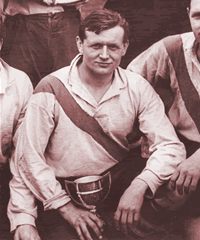 In 1972, Vic left Burton Grammar School and became ‘Secondary Schools Advisor’ for the country borough. Shortly after, he was one of the first four staff coaches for National Rugby Union. A year later, in 1973, Vic spent a few weeks rugby coaching in Poland where he was a little surprised to find that the sport had such a following there. He was later to also spend a short time coaching in Denmark.
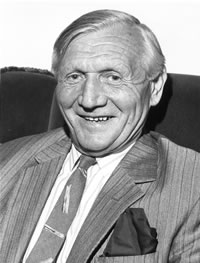 Among other sporting acknowledgements, Victor has been president of the Staffordshire Rugby Coaching Society where he gave practical help to both coaches and individual players; president of Burton Rugby Club as well as President of Staffordshire Rugby. He has also served as chairman of Burton Sports Advisory Council and chairman of Burton Rugby Club, where his membership now spans well over fifty years. There is now a suite named after him at Burton Rugby Club. Some PE teacher!

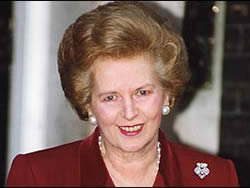 The Secretary of State for Education at the time however, refused to re-open the direct grant list. Given that person’s later education policies, this may seem surprising – it was none other than Margaret Thatcher. Fifteen years or so later, her government’s Education Reform Act set up Grant Maintained Schools to free schools, if they so wished, from the dead hand of local authority control. By that time, the old Direct Grant Schools had been forced by the previous administration to choose either to go totally independent or be subsumed into the local authority system.
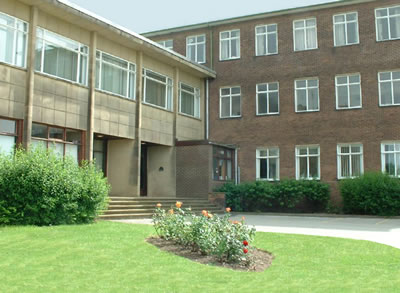 Everything happened at break-neck speed. The new school had to be up and running within months. There was no investment in facilities apart from botched-up conversions of toilets. One group of parents attempted to halt the re-organisation by seeking an injunction. It was the middle of August when a judge in chambers ruled that to unpick the re-organisation at that stage would have been more harmful than to let it go ahead. Until then, we didn’t know for certain what awaited us at the start of the autumn term.
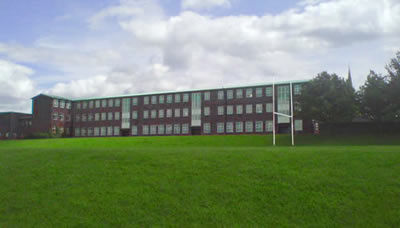 The vast majority of staff, especially the younger ones, were pragmatic. If they wished to teach in a grammar school, then they had to look towards the independent sector. This was not appealing to many of those who had been educated and had taught in the state system. Staff had to do their utmost, for the sake of all pupils, to make the slit-site system, imperfect though it was, work.
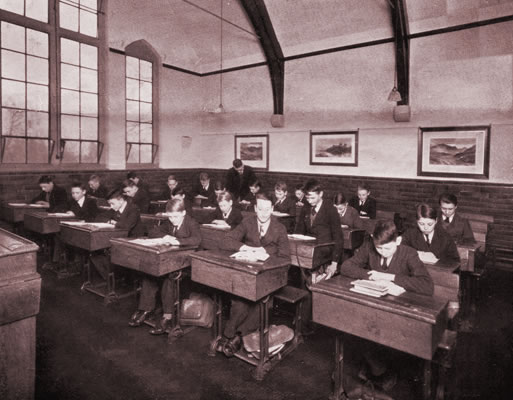
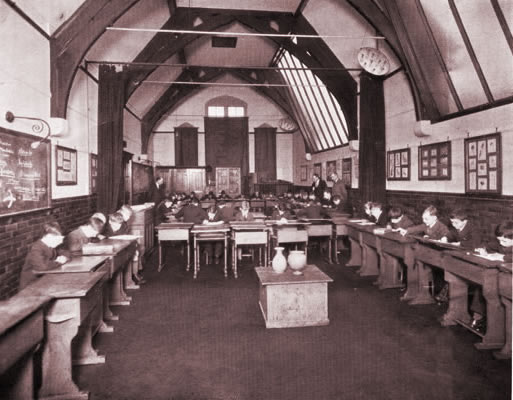
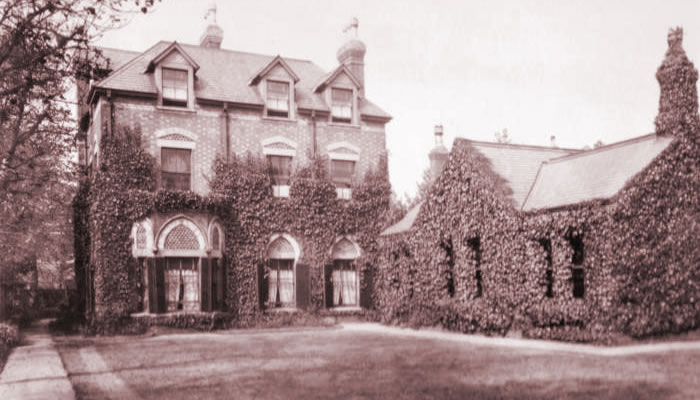
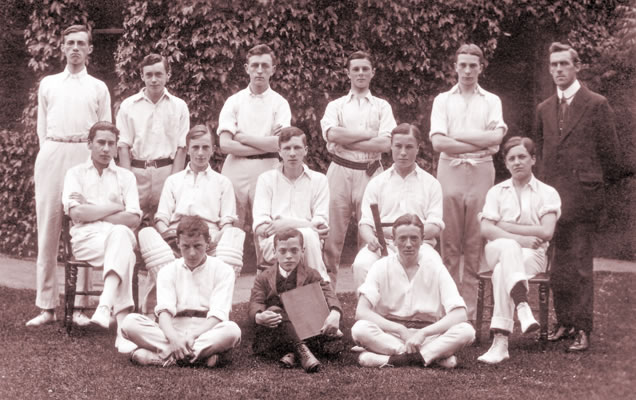
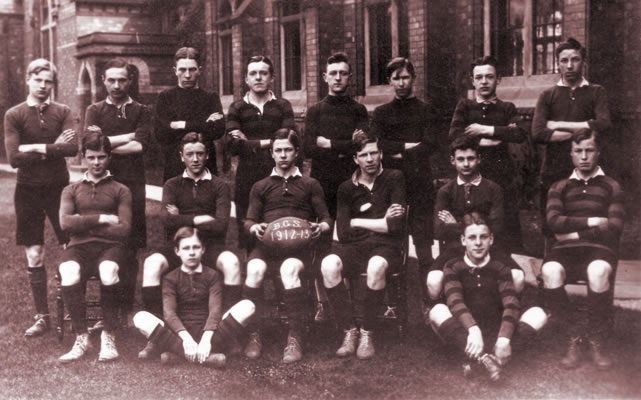
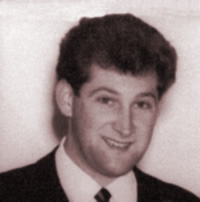 David Mart was born in Ashby before moving to Stapenhill where he attended St Peter’s Junior school. His father was a grocer and managed a store in the centre of Burton for a number of years before eventually becoming a manager for Fine Fare supermarkets and having responsibility for around 50 stores.
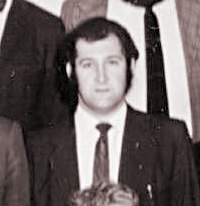 Mr Mart faced more of challenge than he at first perhaps anticipated. He had taken over from Mr James (Jomo) Moore whose lessons had been riotous and everyone was very considerably behind the expected syllabus and had grown comfortable with the culture that Maths was something of a free-for-all. To this day, my first lesson with Mr Mart provides me with a very clear memory of the school as he very successfully asserted himself where Mr Moore had failed. Maths lesons were suddenly very different with a necessarily increased workload to make up for lost time.
 He took time away from Burton Grammar School in order to get a degree at Nottingham University. During his time away, the school had undergone the transition from the Grammar School so when he returned, it was to the newly created Abbot Beyne Comprehensive school. This provides him with a fairly unique history with the school; seeing the changeover from Bond Street to Winshill School as a pupil and later, seeing the changeover from Burton Grammar School to Abbot Beyne Comprehensive School as a teacher.